Feel the thrill of the Himalayas with team of highly experienced trekking professionals.

"Mardi Himal: The Ridge Walk to the Clouds. Closer than ABC, Quieter than Poon Hill."

Home » Destinations » Nepal » Trekking in Nepal » Trekking in Annapurna Region » Mardi Himal Hot cake Trek
From USD 570
100% 5 star based on 81 reviews.
Based on TripAdvisor Reviews
Mardi Himal Hot cake Trek

Mardi Himal Hot cake Trek

Quick Facts: At a Glance

Feature Details
Trip Duration 08 Days (KTM-KTM)
Trekking Days 06 Days on the trail
Accommodation Traditional Teahouse / Lodge / Homestay
Max Altitude 4,700m (Mardi Himal Base Camp)
Difficulty Grade Medium-Hard (Ideal for fit adventurers)
Permit Costs ACAP: USD 30
Best For Photographers, Ridge-walk lovers, Short-time trekkers

Noticeably one of Nepal’s most beautiful treks and with some of the best Himalayan views the Mardi Himal Hot cake Trek of 6 days, with Kathmandu sightseeing is a trekking package filled with culture, nature and adventure! During the Mardi Himal trek you get to see some of the best views of the southern Annapurna Range. Inclusive of the iconic fishtailed shaped mountain, Mt Machhapuchhare (6,977m), Mt Hiunchuli (6,441m), Mt Annapurna South (7,219m), Mardi Himal (5,587m) and highest of all Mt Annapurna I (8,291m)!
Encountersnepal.com takes you on an epic adventure through a less challenging trail than the more famous Annapurna Base Camp but with even better views! Mardi Himal Hot cake Trek is especially designed for those who love a short trek through forests and over ridges towards Mardi Himal Base Camp. Special about this trek in Nepal is that it’s a tea house  trek. tea house  means staying with a local Nepali Lodge. This is a great way to learn all about the unique culture of the locals and their unique lifestyles in the Himalayas. Packed with culture and those glorious Himalayan views the Mardi Himal Hot cake Trek  6 days is one of the best treks in Nepal’s Annapurna region!
Why is everyone calling this the "Hot Cake" Trek?

Most treks require 10+ days to see the big peaks. Mardi Himal changes the game. In just 6 days, you aren't just looking at the mountains from a distance—you are standing on a ridge directly in front of the iconic Machhapuchhre (6,993m) and Annapurna South. It’s called the "Hot Cake" because it’s the most "in-demand" trail for travelers who want:

  • Maximum Altitude, Minimum Days: Reach 4,500m in less than a week.

  • The "Ridge Walk": Unlike valley treks, you walk along a high ridge with 360-degree views every single day.

  • Authentic Teahouses: Experience warm Nepali hospitality in cozy, remote lodges.

  • Photographer's Paradise: The closest view of the "Fishtail" mountain available on any trek.

    Why the "Hot Cake" Trek Needs a Pro Guide

    Many solo trekkers have unfortunately lost their way between High Camp (3,580m) and Base Camp (4,700m) due to sudden fog, snow-covered trails, and altitude sickness.

    The Dangers of Solo Trekking in 2026:

    • The "Fog of Mardi": The ridge is famous for sudden, thick clouds. Without a guide, you can lose the trail in seconds, leading to dangerous steep drops.

    • Altitude Madness (AMS): At 4,700m, oxygen is thin. It causes confusion and poor decision-making—often called "madness"—which is why a guide is essential to monitor your health.

    • New 2026 Legal Rules: As of 2026, the Nepal Tourism Board has strictly reinforced the Mandatory Guide Rule. Foreigners are no longer legally allowed to trek solo in the Annapurna Conservation Area (ACAP).

Expert Itinerary: The "Hot Cake" Route

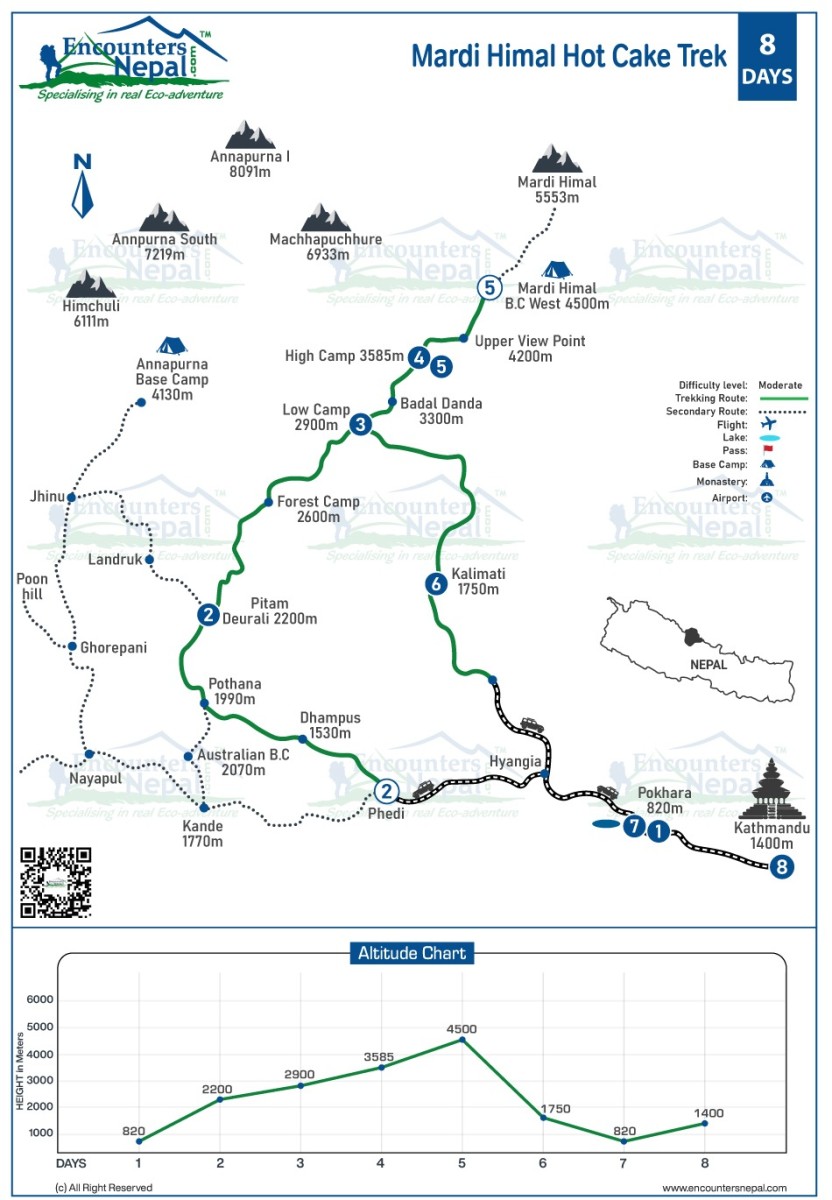
  • Day 01: Kathmandu to Pokhara – Scenic journey to the lakeside city.

  • Day 02: Phedi to Deurali (2,200m) – 3-4 hours walk. The climb begins!

  • Day 03: Deurali to Low Camp (2,900m) – 7-8 hours. A deep forest immersion.

  • Day 04: Low Camp to High Camp (3,585m) – 5-6 hours. Breaking the tree line for 360° views.

  • Day 05: The Summit Push! (4,500m) – Early morning trek to Base Camp. Face-to-face with the giants, then back to Middle Camp.

  • Day 06: Middle Camp to Kalimati (1,750m) – 6-7 hours. Descent through local homestay villages.

  • Day 07: Kalimati to Pokhara – 3 hours walk, then a comfortable drive to your hotel.

  • Day 08: Pokhara to Kathmandu – Return with memories of a lifetime.

Price Includes:

  • Acap Entry Permits
  • Trekkers' Information Management System (TIMS)
  • Local Transport 
  • Three Meals a Day: breakfast, lunch, dinner including tea/coffee with meals time (one per meal)
  • One Guide: English speaking, insured, registered, well-equipped, his salary, food and accommodation
  • One porter Between two person  insured registered, well-equipped, salary, food and accommodation
  • Accommodation (shared) in a tea house lodge
  • Safe drinking water
  • Emergency care service

Price Excludes:

  • Bar & beverage bills,
  • Personal expenses. bottled water, desserts, shower, insurance, rescue,  personal clothing,
  • Any additional services requested and tips to the staff.

During May and June, the Mardi Himal Trek enters a transition period between the pre-monsoon spring and the summer monsoon. This makes "thunderstrokes" (lightning strikes) a critical safety concern, especially on the exposed ridge sections above Low Camp.

  Why Lightning is Dangerous on Mardi Himal

Unlike other valley-based treks, Mardi Himal follows a knife-edge ridge. On Day 4 and Day 5, you are the highest point on that ridge, making you a "human lightning rod" during afternoon storms.


  Critical Weather Patterns (May–June)

  • May (Pre-Monsoon): Mornings are usually clear, but heat buildup in the valleys causes convective thunderstorms in the late afternoon.

  • June (Monsoon Onset): The official monsoon typically hits around June 13th. This brings high humidity, dark cumulonimbus clouds, and frequent afternoon lightning.


 How to Avoid a "Thunderstroke" (Safety Protocol)

To outrank the competition and keep your clients safe, implement these "Golden Safety Rules":

  1. The 1:00 PM Rule: In May and June, you must reach your destination (High Camp or Base Camp) by 1:00 PM. Most lightning activity starts after 2:00 PM as clouds rise from the Pokhara valley.

  2. Avoid the "Summit Madness": If you see dark clouds or hear distant rumbling while heading to Mardi Base Camp (4,500m), turn back immediately. The ridge between High Camp and Base Camp is highly exposed with no shelter.

  3. Ditch the Metal: During an active storm, trekking poles (especially aluminum ones) act as conductors. If caught in the open, put your poles away and move 50–100 feet away from other trekkers to avoid "side-flash" strikes.

  4. The "Lightning Crouch": If you cannot reach a teahouse, find a low spot (not under a lone tree). Squat low with your feet together and your head tucked. Do not lie flat, as lightning travels through the ground.


 Key Gear for May/June

  • Non-Conductive Gear: Consider carbon fiber trekking poles over aluminum.

  • Full Waterproofing: High-quality hardshell jackets are essential, as getting wet increases the risk of hypothermia after a storm passes.1

  • Early Start Headlamps: Start your trek at 4:00 AM or 5:00 AM to finish before the afternoon "thunderstroke" window.


 Safety Comparison: Solo vs. Guided (May/June)

Hazard Solo Trekker Risk Our Guided Trek Safety
Lightning Unaware of local cloud patterns. Guide monitors "valley buildup" & calls for early turn-around.
Trail Visibility High risk of walking off the ridge in fog. Guide knows the terrain markers by heart.
Emergency No way to call for help in a storm. Guides carry emergency radios/GPS and first aid.

Similar Homestay Treks in Nepal