The Shadow Over the Peaks: Cleaning Up Nepal’s Rescue Industry
For years, a "silent altitude sickness" has been infecting the trekking industry in Nepal—not a medical one, but a moral one. On January 25, 2026,the Central Investigation Bureau (CIB) finally administered the "cure" that honest guides and international travelers have been waiting for.
By arresting six high-profile industry figures, Nepal isn't just catching criminals; it's fighting to save the soul of Himalayan tourism.

The Crackdown: Who Are the "Big Fish"?
In a packed press conference in Kathmandu, CIB Chief Manoj Kumar Kesi detailed the arrest of six executives
who allegedly turned life-saving rescues into a high-stakes ATM. These weren't small-time scammers;
they were the directors and managers of some of the busiest agencies in the country:

-
The Arrested Team in Kathmandu
On Sunday, January 25, 2026, the CIB arrested six high-ranking officials from three prominent trekking and rescue agencies.
Name of Arrested Role/Affiliation Company Jayaram Rimal Chairman Mountain Rescue Service Pvt. Ltd. Bibek Pandey Manager Mountain Rescue Service Pvt. Ltd. Rabindra Adhikari Director/Chairman Nepal Charter Service Pvt. Ltd. Bibekraj Thapaliya Operations Manager Nepal Charter Service Pvt. Ltd. Mukti Pandey Managing Director Everest Experience and Assistance Subhash KC Director Everest Experience and Assistance

These men are now facing charges that go far beyond simple fraud. They are being held under the Organized Crime Act, accused of a systematic conspiracy to prioritize profit over the safety of the very people who come to admire Nepal’s beauty.
The "Hazard" to the Heart of Nepal
When we talk about "hazards" in the mountains, we usually mean avalanches or thinning air. But the CIB investigation revealed a different kind of danger—one created by human greed. This scam didn't just steal money; it created a triple threat to the country:
1. Betraying the Traveler’s Trust
Imagine being a trekker, tired and slightly winded, only to have your guide—the person you trust with your life—tell you that you’re "dying" and need a $10,000 helicopter immediately. Investigators found that some guides even went as far as spiking food with baking soda to cause stomach cramps, intentionally making healthy people feel sick just to trigger a commission-heavy rescue.
2. Threatening the Future of Trekking
This isn't just about six people. It’s about the fact that global insurance giants were on the verge of blacklisting Nepal. If companies in the UK, USA, or Australia stopped covering Himalayan treks, the industry would vanish. Thousands of honest porters, tea-house owners, and veteran guides from EncountersNepal.com would lose their livelihoods because of the greed of a few "desk-bound" directors in Kathmandu.
3. Overloading the Skies
To milk as much money as possible, these agencies often performed "shuttle" rescues—packing five or six people into a single flight but billing each individual's insurance for a private charter. This didn’t just double the profit; it dangerously overloaded helicopters at high altitudes, risking a catastrophic crash every time they took off.
The Global Spotlight: A Reputation at Stake
The world was watching. This story was cited by major news agencies including:
-
International: Reuters, AFP, and the Press Trust of India (PTI).
-
Professional: Traveller Assist and the International Travel Insurance Journal (ITIJ).
-
National: The Kathmandu Post and OnlineKhabar.
The consensus across all reports was the same: Nepal had to act, or it would lose its status as the world’s premier trekking destination. By using the Organized Crime Act, the government is sending a message that "Brand Nepal" is no longer for sale to scammers.

A New Path Forward: Your Safety Checklist
As the mountains begin to heal from this scandal, the responsibility falls on us to be smarter travelers. If you’re heading to the trails in 2026, here is how you can help keep the industry clean:
-
Choose Integrity: Trek with senior guides who have decades of clean service. A guide’s reputation is your best insurance policy.
-
Listen to Your Body, Not Just the Guide: If you have a mild headache, try descending a few hundred meters and drinking water before agreeing to a $5,000 flight.
-
Keep Your Insurance Info Private: Don’t give your policy details to your guide on day one. Keep that information for actual emergencies.
-
Verify the Referral: If you are "evacuated" to Kathmandu, ask to go to a reputable hospital like CIWEC or ERA, rather than a clinic pre-selected by a suspicious agency.
The Himalayas are timeless, but the trust of the world is fragile. This week’s arrests are a painful but necessary step in ensuring that when someone yells for help in the mountains, it’s because they truly need it—not because someone in an office wants a bigger paycheck.

Fake rescue related news publish link below
Fake rescue kantipur exclusive
investigation-into-fake-rescue-after-seven-years-an-attempt-to-erase-the-stain-on-the-tourism-sector
#BBCNepali #mountainrescue #NepalPolice
CIB Arrest Fake Rescue
Nepal police arrest 6 tour operators in USD 20 mn fake rescue insurance scam
CIB arrests six travel company operators over fake rescue scam
Nepal News Source Highlights: The Heli-Rescue Crackdown
Nepal Police Arrest Rescue Operators in Alleged Fake Helicopter Evacuation Scam
6 arrested for fake rescue
Travel operators arrested for fake rescue of tourists
Nepal Police arrest six in fake helicopter rescue scam targeting foreign tourists
Six travel operators nabbed on fake rescue scam
Fake helicopter rescues in Nepal net millions in insurance claims
Nepal Police arrest rescue operators over fake helicopter evacuation scam
Six Travel Operators Arrested in Fake Tourist Rescue Scam
CIB’s fake rescue crackdown draws fire for ignoring key suspects
Arrest
Key government agencies say probe into fake rescue scam in final stages
Police reopened old case files and arrested six top executives of helicopter rescue and trekking companies this week.
Nepal Police Arrest Six in $20 Million Himalayan "Fake Rescue" Insurance Scam
Fake Rescue dhanda
Nepal Police arrest rescue operators over fake helicopter evacuation scam
What is the fake tourist rescue incident? Why was this incident kept secret? Understand in five Q&A
Nepal travel executives arrested for scamming millions with fake mountain rescues
Nepal Arrests 6 Officials, Accusing Them of Fraudulent Everest Rescues
Nepal’s tourism sector welcomes arrests in fake mountain rescues, urges tough sanctions
Nepal travel executives arrested for scamming millions with fake mountain rescues
Nepal's 'Fake Rescue Scam' From 2018 Surfaces; 6 Arrested From 3 Rescue Agencies | WION Dispatch
The recent "fake rescue" scandal in Nepal isn't just a corporate fraud case; it is a heartbreaking betrayal of the very soul of Himalayan trekking. For decades, the bond between a trekker and their guide was sacred—based on trust, survival, and mutual respect. But in recent years, a "get rich quick" culture turned that bond into a transaction.
1. The Death of the "Sacred Bond"
When you walk into a lodge in the Everest Buffer Zone and see a helicopter rescue listed next to "Dal Bhat" on a menu, something fundamental has broken.
-
The Guide as Salesman: In the past, a guide’s pride was getting you to the top safely. Today, some guides are under immense pressure from their agencies to "generate" rescues. Instead of encouraging a trekker to drink water and rest, they whisper, "You look pale, let’s just fly you to a hotel in Kathmandu." It transforms a protector into a predator.
-
The Lodge as a Middleman: Local lodge owners, who used to be the pillars of mountain hospitality, became part of the "nexus." When they get a kickback for every helicopter that lands in their backyard, they stop caring about your health and start looking at your insurance policy.
2. The Human Cost of "Soft Rescues"
The real tragedy isn't just the $20 million stolen from insurers; it’s the danger it creates for people truly in need. * The "Boy Who Cried Wolf" Effect: When the sky is constantly buzzing with "taxi rescues" for tired hikers, pilots become fatigued and insurance companies become cynical.
-
The Insurance Exit: If major insurers like World Nomads or Garmin/GEOS eventually pull out of Nepal due to fraud, a trekker with a real brain edema (HACE) might find their rescue delayed while an operator waits for a credit card authorization. That delay can be fatal.
3. Reclaiming the "Track"
Getting tourism back on track requires more than just arrests; it requires a cultural shift back to authentic mountaineering.
-
Removing the "Menu": National Park authorities must treat rescue advertising as "Visual Pollution." A helicopter is a tool of last resort, not a luxury shortcut. If you wouldn't see a "Rescue Menu" in the Swiss Alps or the Rockies, you shouldn't see it in the Khumbu.
-
Empowering the Medical Pros: We need to move the power away from the "Guide-Heli-Hospital" triangle. The Himalayan Rescue Association (HRA) and local clinics like the one in Lukla must be the only ones who can authorize a rescue. If a doctor doesn't sign off, the helicopter doesn't fly.
-
Educating the Trekker: We also have to be honest with ourselves as travelers. Using insurance to "skip the walk back" is fraud. We need a "Leave No Trace" policy for our insurance—only use it if your life or limb depends on it.
4. Why 2026 is the Year of Hope
The January 2026 arrests of top industry executives send a clear message: The mountain is watching. By cleaning out the "rot" at the top, Nepal is trying to protect the honest guides and lodge owners who still believe in the spirit of the Himalayas.
The goal isn't just to stop the scam—it's to make sure that when you look up at a helicopter in the Everest sky, you feel a sense of relief for someone’s life, not a sense of disgust at a business deal.
CIB Headquarters Contact Information
If you need to contact the headquarters regarding this case or for other official business, here are the verified details:
| Detail | Information |
| Location | Maharajganj / Lazimpat, Kathmandu, Nepal |
| Phone | +977-1-4511776 |
| Mobile | +977-9851283140 |
| cib@nepalpolice.gov.np | |
| Website | cib.nepalpolice.gov.np |
01/02/2026
BITE OF THE DAY: SAVIORS OR SCAMMERS?
KATHMANDU: Drama unfolds at CIB Headquarters as the "Fake Rescue" team breaks their silence! From behind bars, the arrested travel bosses insist: "We are innocent. We saved lives. This arrest is a shame!"
But the CIB isn't blinking. They’ve bitten back with a $20 million fraud file, alleging a "mountain of lies" involving 317 faked flights and forged medical bills.
Is this a heroic team being scapegoated, or a greedy "nexus" that nearly grounded Nepal’s tourism? As international insurers watch, the industry’s reputation hangs by a rotor blade. Innocence or Insurance Fraud? The court decides next!
#NepalScandal #CIB #FakeRescue #BiteOfTheDay
08/02/2026
Kathmandu. Nepal Police have arrested
Dr. Girwanraj Timilsina, the operator of Siddhi International Hospital in Lazimpat, in connection with a fake rescue case.
A team from the Central Investigation Bureau (CIB) of the police arrested Timilsina today on charges of defrauding insurance companies by conducting fake rescues of foreign tourists during treks and mountaineering expeditions in Nepal's Himalayan region.

Bureau Spokesperson, Senior Superintendent of Police (SSP) Shivakumar Shrestha, informed that the doctor was arrested on allegations that the hospital, in collusion with Mountain Rescue Service, Everest Experience & Assistance, and Nepal Charter Service, prepared fake documents to commit insurance fraud.
Six individuals from the three companies have already been arrested in connection with the case. The Bureau stated that the incident has caused serious damage to Nepal's tourism sector internationally.
Spokesperson Shrestha added that further investigation against the arrested Dr. Timilsina is proceeding under Section 51 (acts against national interest) of the Muluki Criminal Code, 2074, and other forgery-related offenses.
Nepal’s tourism sector welcomes arrests in fake mountain rescues, urges tough sanctions
11-02-2026 |Diyo Post
This report from Diyopost exposes a deep-seated "Fake Rescue" and insurance fraud racket that has recently come under the intense scrutiny of Nepal’s Central Investigation Bureau (CIB). At its core, the scam involves a coordinated effort between trekking agencies, helicopter companies, hospitals, and guides to stage fraudulent emergency evacuations for foreign trekkers. By faking medical emergencies, these groups siphon massive payouts from international insurance providers—a practice that seriously threatens the reputation of Nepal’s tourism industry.
Key Developments in the Investigation:
-
Organized Crime Charges: The CIB has officially upgraded the case to an "Organized Crime" investigation. This allows authorities to hold suspects for up to 60 days, giving them more time to dismantle the entire network rather than just punishing individuals.
-
High-Profile Arrests: Several key figures are already in custody, including Dr. Girvan Raj Timilsina, owner of Shriddi Hospital, and prominent rescue operators like Mukti Pandey and Jayaram Rimal.
-
Political Friction: The case has taken a political turn. The report mentions that Sudon Gurung, a politician from the Rastriya Swatantra Party (RSP), allegedly tried to lobby the Prime Minister for the release of Mukti Pandey (who has ties to the party) but was reportedly rebuked.
-
A Hardline Stance: Despite pressure from middlemen and lobbyists trying to settle the matter quietly, the CIB, led by AIG Manoj KC, is reportedly maintaining a strict "no-compromise" stance to root out the corruption.
This crackdown is seen as a vital step in protecting the integrity of Himalayan trekking and ensuring that genuine rescue services remain credible for future travelers
.......
In Nepal, the legal landscape for those involved in the "Fake Rescue" scam is quite severe, especially since the investigation was upgraded from general fraud to Organized Crime and Offenses Against the National Interest.
1. Organized Crime (Organized Crime Control Act)
Under the Organized Crime Control Act, if a crime (like fraud) is committed by a structured group, the penalties are significantly enhanced:
-
Additional Punishment: Convicted individuals face one and a half times (150%) the penalty prescribed for the original crime (e.g., if fraud carries 7 years, they could face over 10 years).
-
Specific Group Offenses: Simply establishing or running a criminal group can lead to up to 5 years of imprisonment and a fine.
-
Investigation Period: Authorities can hold suspects for up to 60 days in custody for investigation, compared to the 25 days allowed for standard crimes.
2. Offenses Against the National Interest (Section 51, Penal Code 2017)
The CIB has invoked this section because the scam damages Nepal’s international reputation and tourism economy.
-
Imprisonment: This is considered a serious felony. Those found guilty of acts that damage the "national image, sovereignty, or international reputation" can face up to 10 years of imprisonment and a fine.
3. Fraud and Forgery (Muluki Criminal Code)
The underlying acts of faking medical bills and insurance claims fall under:
-
Fraud: Up to 7 years of imprisonment and a fine of up to 70,000 NPR.
-
Forgery of Documents: Since the racket involved faking hospital discharge summaries and flight logs, suspects face additional years for "Forgery of Public/Private Documents."
Summary Table of Potential Penalties
| Offense Category | Maximum Prison Term | Impact of "Organized" Status |
| National Interest | Up to 10 years | Higher scrutiny, no easy bail |
| Fraud | Up to 7 years | Penalty increased by 50% |
| Money Laundering | 2 to 10 years | Fine up to 5x the amount involved |
28 Magh2082
RESCUE RACKET ROCKED: SCAM ARTISTS EXPOSED!
In a bombshell investigation, Nepal’s Central Investigation Bureau (CIB) has smashed a massive insurance fraud ring worth nearly 3 billion rupees. This "Fake Rescue" empire, allegedly masterminded by Dr. Girwan Raj Timilsina of Shreedhi International Hospital, preyed on foreign tourists by faking high-altitude emergencies.
The scam involved forging medical reports for 265 tourists who were never actually ill, allowing the gang to siphon millions from international insurance companies. Dr. Timilsina was reportedly caught after incriminating voice messages to Nepal Charter Service owner Ravindra Adhikari surfaced. Investigators found millions transferred between the duo for their "paper patients." The hospital’s dirty secret is out—making millions while turning real rescues into a criminal fairytale!
Date Feb 24/25 ,2026
The Nepal Police has arrested two more individuals in connection with the "fake rescue" scam, a fraudulent scheme involving inflated or unnecessary helicopter evacuations of tourists. The arrested suspects, identified as 56-year-old Singh and 28-year-old Tiwari, bring the total number of people in custody for this case to nine.
The group—which includes trekking agency owners, hospital representatives, and helicopter company shareholders—is accused of damaging Nepal’s international reputation. Authorities are investigating the case under "organized crime" and "acts against national interest." Police continue to search for other suspects involved in this high-profile tourism sector scandal.
Kantipur exclushive #touristrescue #scam #kantipur #fraud #ekantipur
Based on the report from Diyo Post (and corroborating investigation details from the Central Investigation Bureau), here is a summary of the "fake rescue" scam involving the recent indictment and investigation of suspects:
The Fake Rescue Scam Summary
The Nepal Police Central Investigation Bureau (CIB) has intensified its crackdown on a massive $20 million insurance fraud involving staged helicopter rescues. Recent legal actions have targeted 28 suspects (including executives and companies) linked to a sophisticated "nexus" of trekking agencies, hospitals, and helicopter operators.
11 March 2026
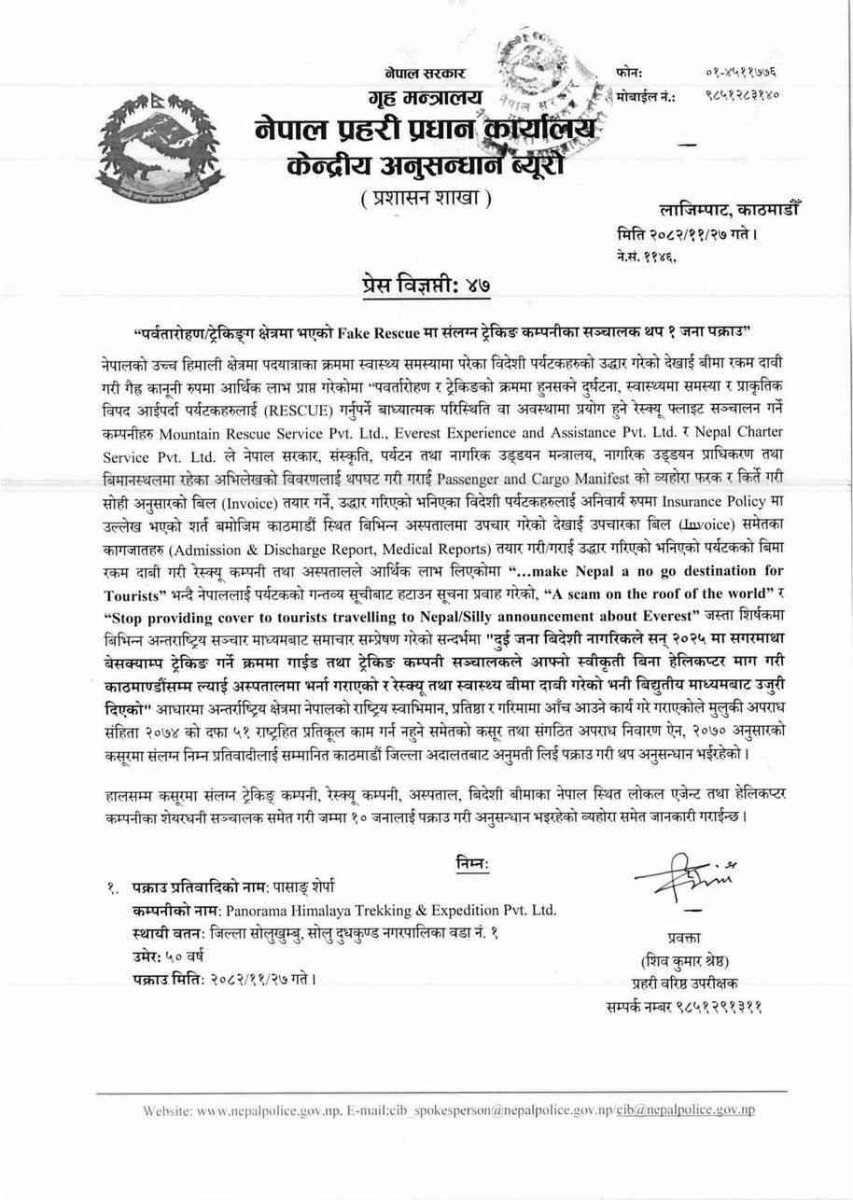
KATHMANDU: Police have arrested a trekking company operator for allegedly being involved in a fake rescue scam that targeted foreign tourists to fraudulently claim insurance money.
The Central Investigation Bureau (CIB) of Nepal Police arrested Pasang Sherpa on Wednesday on charges of involvement in fraudulent helicopter rescues in Nepal’s trekking and mountaineering sector.
Fifty-year-old Sherpa, a resident of Solu Dudhkunda Municipality-1 in Solukhumbu, is the operator of Panorama Himalaya Trekking and Expedition Pvt. Ltd.
According to police, investigations have revealed the existence of an organized group that falsely reports health emergencies involving foreign trekkers in Nepal’s high Himalayan regions and then conducts unnecessary helicopter rescues to claim large insurance payouts.
Authorities said some rescue flight operators manipulated records by altering passenger and cargo details, preparing bills accordingly, and producing documents showing that the supposedly rescued tourists received treatment at hospitals in Kathmandu.
These documents were then used to claim substantial compensation from insurance companies, allowing those involved to obtain financial benefits illegally, police said.
Police also noted that the incident has tarnished Nepal’s international reputation after several foreign media outlets published reports highlighting the issue with headlines such as “A Scam on the Roof of the World” and “Stop Providing Cover to Tourists Travelling to Nepal.”
Pasang sherpa arrest : Diyo post
15 March 2026 :The Central Investigation Bureau (CIB) of Nepal has recently concluded a major investigation into the "fake rescue" scam, recommending the prosecution of 33 individuals. The report, which spans over 1,200 pages, was submitted to the Government Attorney's Office on March 15, 2026.
Key Details of the Case:
-
Charges: The individuals face charges related to offenses against the national interest, forgery, criminal gain (extortion/fraud), and organized crime.
-
Financial Impact: The police are claiming damages (Bigo) totaling approximately 94.85 crore NPR, along with nearly $3 million USD and 14,500 Euros in separate claims involving foreign nationals.
-
Who is Involved: The investigation identifies a coordinated "syndicate" involving:
-
Trekking Agencies & Guides: Alleged to have initiated the fake distress calls.
-
Helicopter Companies: Four major companies (Air Dynasty, Mountain Heli, Manang Air/Base Camp, and Altitude Air) were cited for creating "fake passenger manifests."
-
Hospitals: Three hospitals in Kathmandu (Siddhi International, Swacon International, and Era Hospital) are under scrutiny for admitting tourists who didn't need hospitalization to inflate insurance bills.
-
Rescue Companies: Entities like Mountain Rescue Service and Nepal Charter Service allegedly acted as middlemen to facilitate the fraudulent billing.
-
Extent of the Fraud:
The report highlights significant discrepancies in rescue records. For example:
-
Mountain Rescue Service: Out of 1,248 rescues, 171 were found to be fake.
-
Nepal Charter Service: 75 out of 471 rescues were fraudulent.
-
Everest Experience: 71 out of 601 rescues were fraudulent.
Current Status:
Ten individuals have already been arrested, including chairpersons and managers of several rescue and trekking companies, as well as a hospital director and a former vice-president of the Airline Operators Association of Nepal. Twenty-three others remain at large.
This move is seen as a significant step toward cleaning up the tourism industry’s reputation and addressing the long-standing concerns of international insurance providers regarding fraudulent claims in the Himalayas.
Source :Diyo Post
20th March 2026 Nayapatrika
22/03/2026
Arrest of Khom Adhikari (originally from Dhuwakot, Dhading) by the Central Investigation Bureau (CIB)
of the Nepal Police. He was arrested for his alleged involvement in the high-profile "Fake Rescue" insurance scam.
The article from DiyoPost (dated March 22, 2026) reports on a major scam involving fake helicopter rescues of tourists in Nepal
The "Fake Rescue" Scam at Shriddhi Hospital
The Core Allegation
The Central Investigation Bureau (CIB) has filed charges against 32 individuals involved in a fraudulent scheme where healthy tourists were "rescued" by helicopter to claim massive insurance payouts.
Key Findings & Evidence
"Chilling with Beer": The CIB discovered WhatsApp messages and photos on the phone of Rabindra Adhikari (owner of Nepal Charter Service). The evidence shows tourists, who were officially listed as "critically ill patients," sitting in the cafeteria of Shriddhi International Hospital in Lazimpat, drinking beer and relaxing.
The Network: The scam allegedly involved a collaboration between:
Dr. Girvan Raj Timilsina (Owner of Shriddhi International Hospital)
Rabindra Adhikari (Owner of Nepal Charter Service)
Magic Himalaya Treks & Expedition
Insurance Fraud: The group is accused of defrauding international insurance companies of billions of rupees by creating fake medical emergencies for trekkers who did not actually need rescue.
Legal Action
The government attorney's office has submitted a formal charge sheet based on the CIB's investigation.
Currently, 11 people are in custody, and detention hearings (bail hearings) are scheduled to begin.
The article from DiyoPost(dated March 22, 2026) discusses a controversial development in the ongoing Fake Rescue Scam investigation. Here is the summary:
Audio Evidence Claims Rajendra Bahadur Singh Helped Hide Evidence
The Controversy: The report focuses on Rajendra Bahadur Singh, identified as one of the key masterminds of the fake rescue racket. Despite the Central Investigation Bureau (CIB) recommending him for prosecution, the Kathmandu District Government Attorney's Office decided not to file charges against him, citing a "lack of evidence."
Key Details from the Article:
-
Leaked Audio: DiyoPost claims to have an audio recording where Singh is heard conversing with Shyam Sundar Kandel (who is currently on the run). In the audio, Singh allegedly discusses ways to destroy or hide evidence related to the rescue operations.
-
Lobbying Charges: Singh is accused of lobbying the Civil Aviation Authority of Nepal (CAAN) to withhold data on fake rescues and urging the Department of Tourism to remove the word "rescue" from official terminology to avoid scrutiny.
-
Political Pressure: Sources from the Government Attorney’s Office suggest there was intense pressure from the Office of the Attorney General to protect Singh. This reportedly delayed the filing of the formal charge sheet by eight days.
-
Media Manipulation: The article also alleges that Singh used his influence to plant favorable stories in mainstream media (specifically mentioning Nagarik Dainik) to divert public attention and defend those involved in the scam.
-
Background: Rajendra Bahadur Singh is the former General Manager of Mountain Helicopters and Simrik Air.
-
Date Chaitra 20,2082
-
The Fake Rescue Scam in Nepal has reached a critical legal turning point. Following an intensive investigation into fraudulent helicopter rescue operations, the Kathmandu District Court has moved against 32 individuals involved in the racket.
List of Fake Rescue Accused (PDF File - 2.3 MB) - open in new window
Bail demand from the fake rescue accused. (PDF File - 12.4 MB) - open in new window
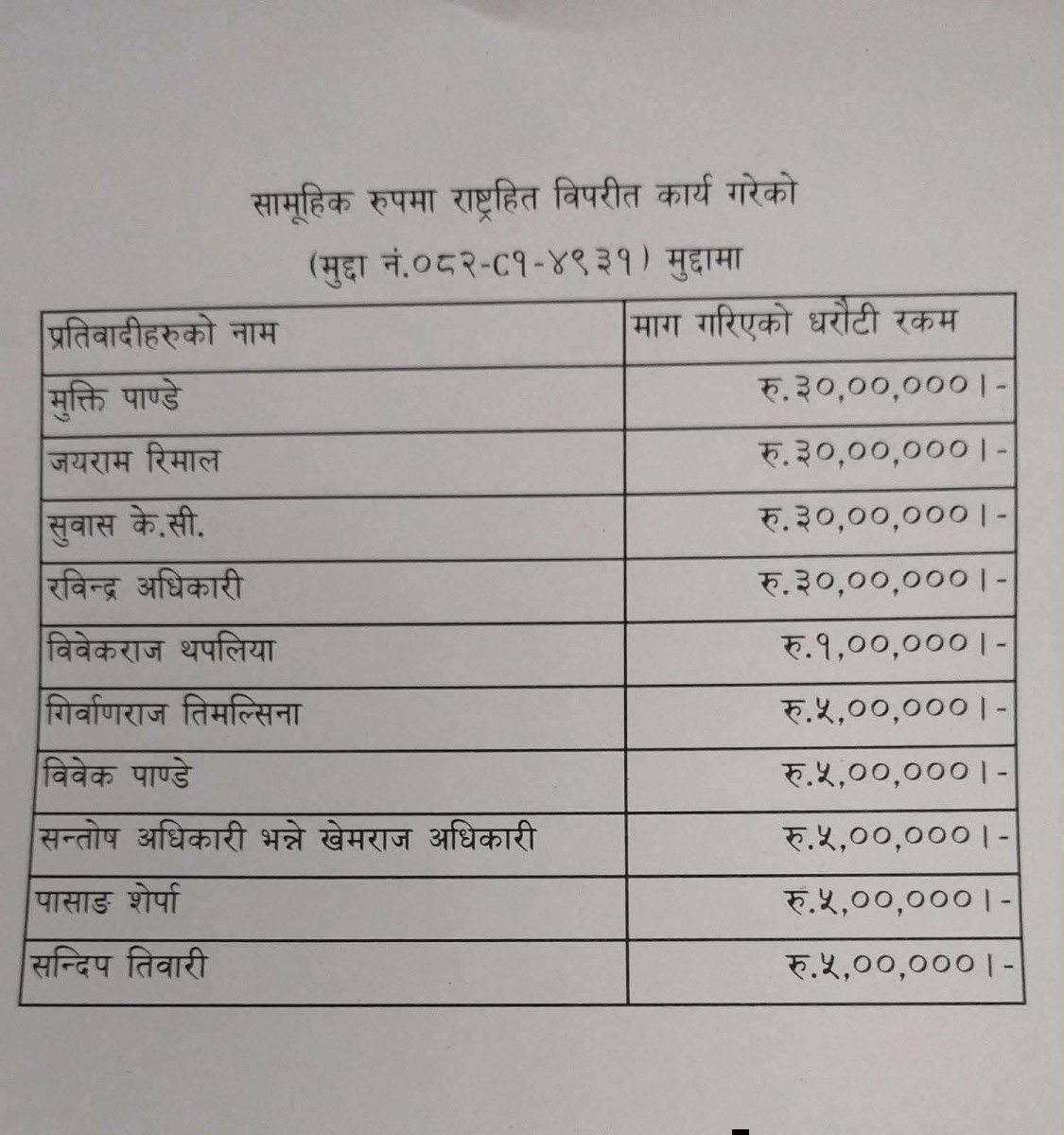
The court has demanded bail amounts ranging from 100,000 to 3 million NPR from ten key suspects, including trekking agency owners and medical professionals. These individuals are accused of orchestrating unnecessary airlifts and inflating insurance claims to defraud foreign tourists and insurance companies.
Furthermore, arrest warrants have been issued for 22 additional suspects who remain at large. This crackdown aims to protect Nepal’s tourism reputation and ensure the integrity of its Himalayan rescue operations.
-
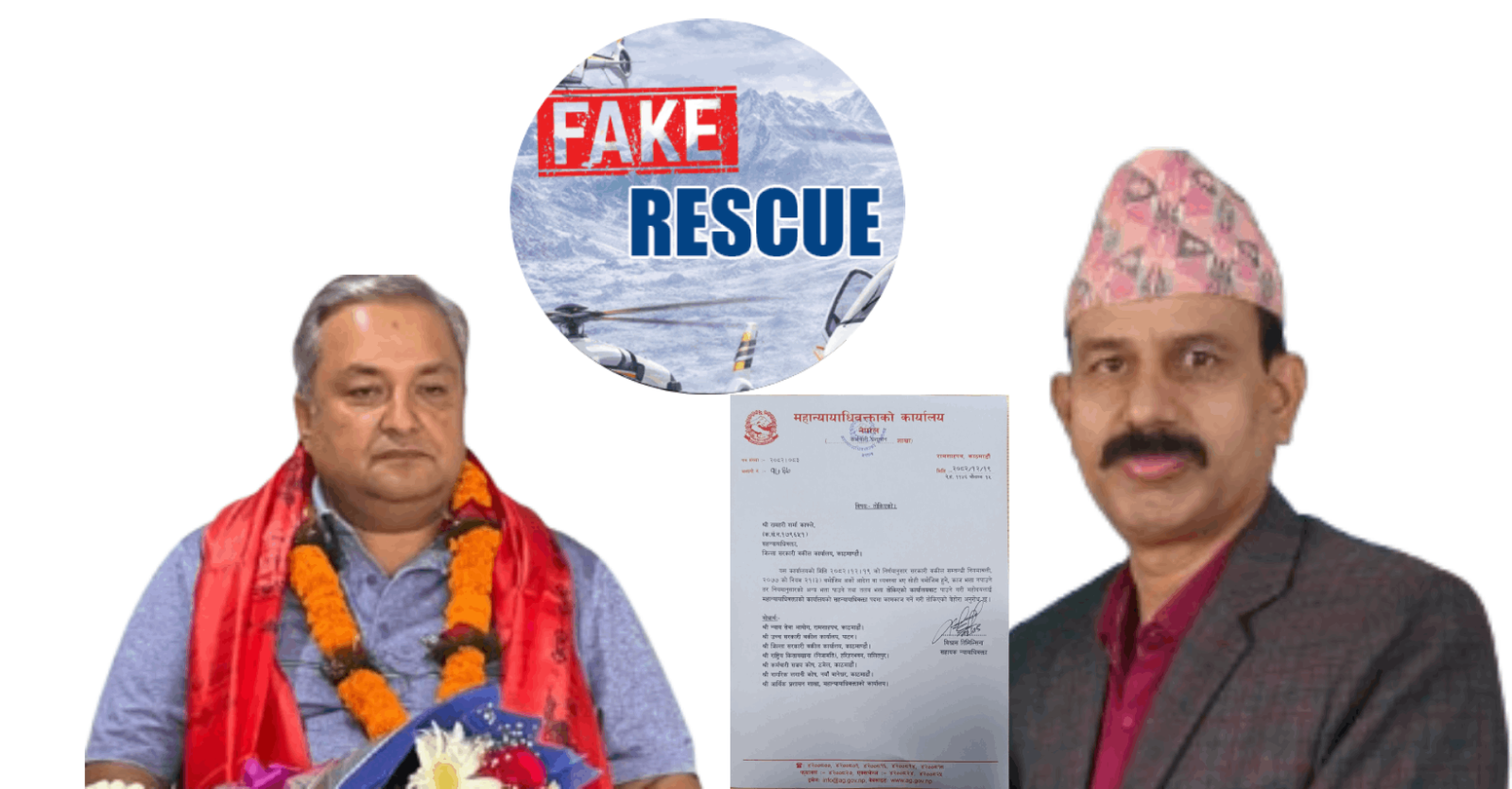
Photo Diyo post -
In a significant development regarding the "Fake Rescue" scandal, Kathmandu's District Attorney, Achut Mani Kafle, has been abruptly transferred. This move comes amid serious allegations that his office intentionally weakened the legal case against those involved in the fraudulent helicopter rescue racket.
Critics and investigators expressed concerns that the charges filed under his leadership were diluted, potentially allowing high-profile suspects—including trekking agency owners and hospital executives—to escape harsher penalties. The scam, which involved inflating insurance claims through unnecessary airlifts of tourists, has severely tarnished Nepal’s tourism reputation.
The Office of the Attorney General initiated the transfer to ensure an impartial prosecution and to restore public confidence in the judicial process as the high-stakes case moves forward
-
EXPOSED: THE MOUNTAIN MAFIA FALLS!
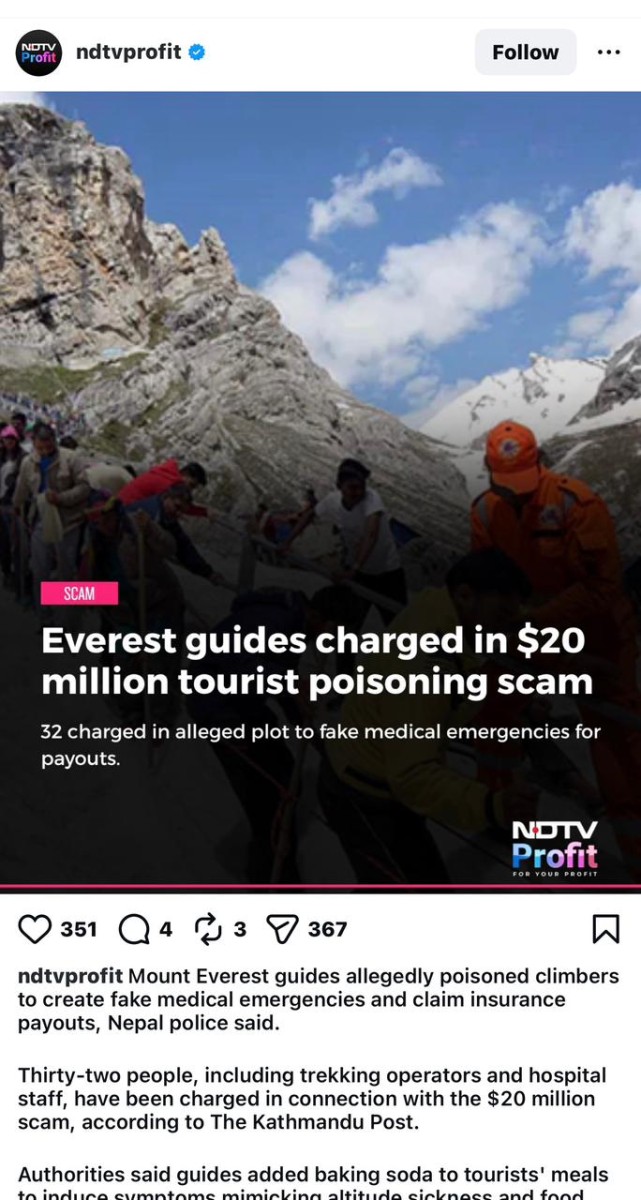
THE GREED THAT SHOCKED THE HIMALAYAS: COURT FINALLY CRACKS DOWN ON THE MULTI-MILLION DOLLAR "FAKE RESCUE" RACKET!KATHMANDU – The game is over for the high-flying fraudsters of the Himalayas! In a bombshell ruling that has sent shockwaves through the trekking industry, the Kathmandu District Court has officially established guilt in the notorious Fake Rescue Scandal. For years, greedy vultures—disguised as trekking moguls and medical pros—have been "bleeding" international insurance companies dry. But the law has finally caught up. With bail set as high as 30 Lakhs and a mountain of evidence, the "Mountain Mafia" is finally facing the music!
THE SICKENING SCHEME
It wasn't just business; it was a cold, calculated conspiracy. These scammers didn't wait for emergencies—they created them!Dirty Tactics: Forcing healthy tourists into choppers.
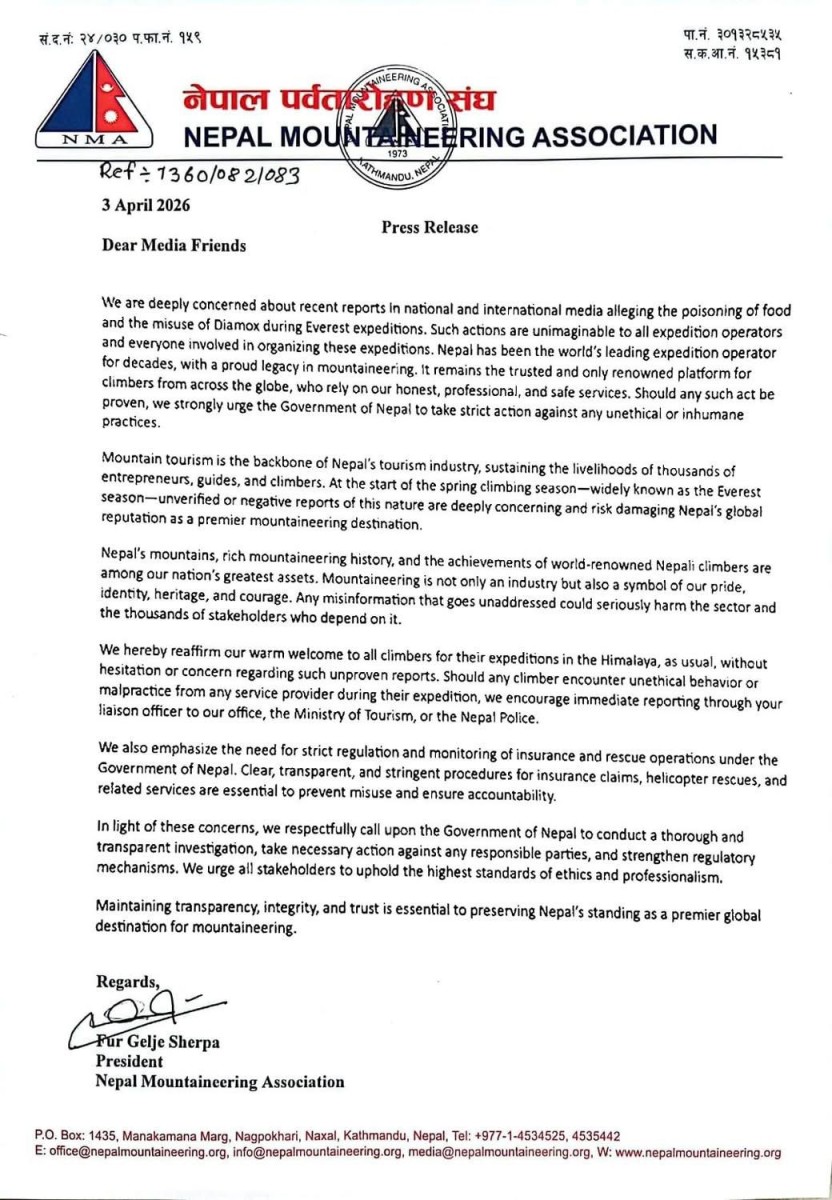
The "Baking" Scandal: Allegations of contaminating food to make trekkers sick just to trigger insurance payouts!
The Paper Trail: Inflated bills that turned a $3,000 flight into a $50,000 "emergency" medical evacuation.
CIB UNLEASHED: NO ONE IS SAFE!
Now that the court has proven the crime, the Central Investigation Bureau (CIB) is officially REOPENING THE VAULTS. "The path is clear," says an insider. "We are going back. Years of records, thousands of flights, and every dirty dollar will be tracked."The CIB is hunting for the "Big Fish" who thought they were untouchable. They aren't just looking at today—they’re digging up the old files to expose a decade of corruption.
JUSTICE OR A COVER-UP?
The drama doesn't stop at the courtroom. Even the Government Attorney wasn't safe from the fallout! Accused of "watering down" the charges, Kathmandu’s top lawyer was abruptly transferred in a move that screams: No more protection for the powerful.THE BOTTOM LINE
Nepal’s reputation was on the brink of collapse. Insurance giants were ready to blackball the entire country. This verdict isn't just about arrests; it's about saving the soul of the Himalayas. Stay tuned... because the CIB is just getting started, and more heads are about to roll! - Fake rescue related news photo shot
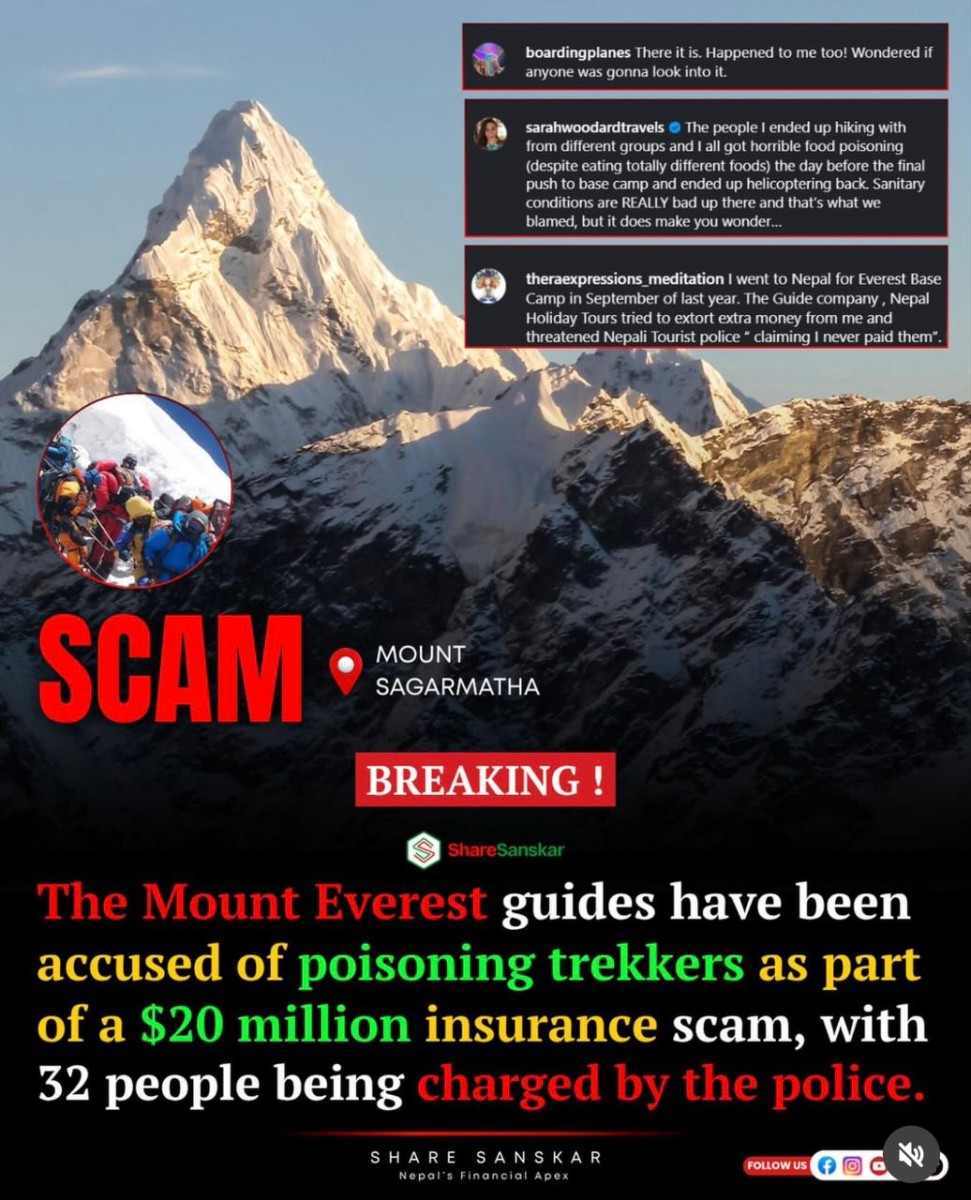
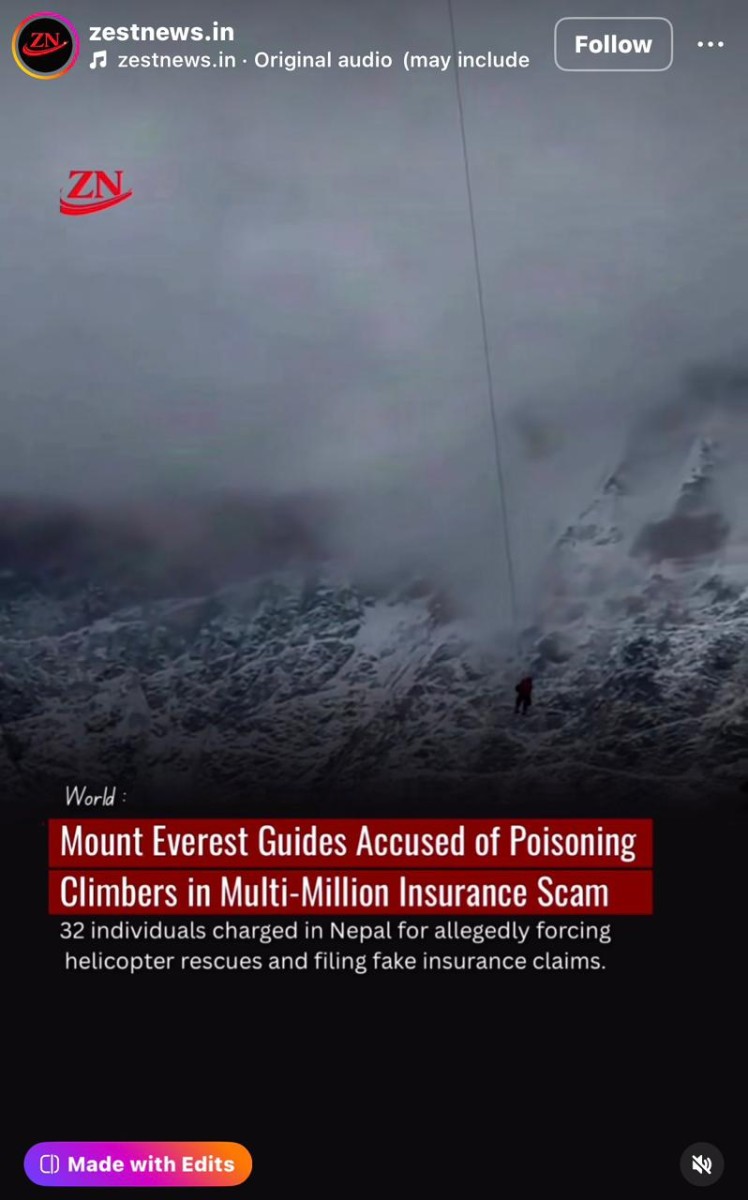
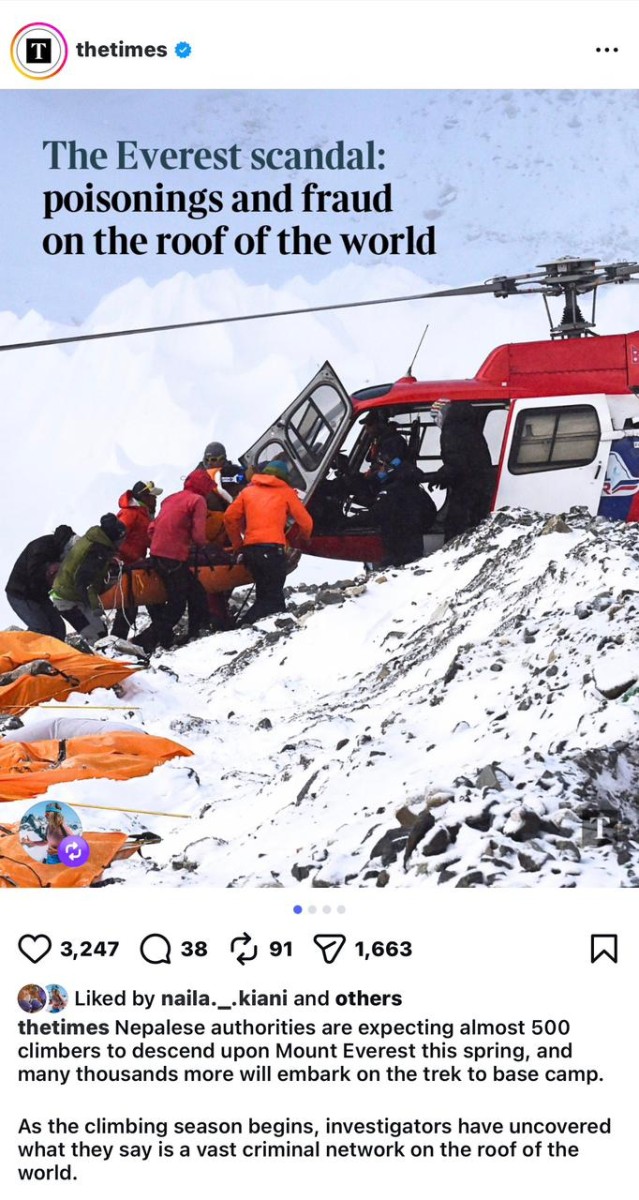
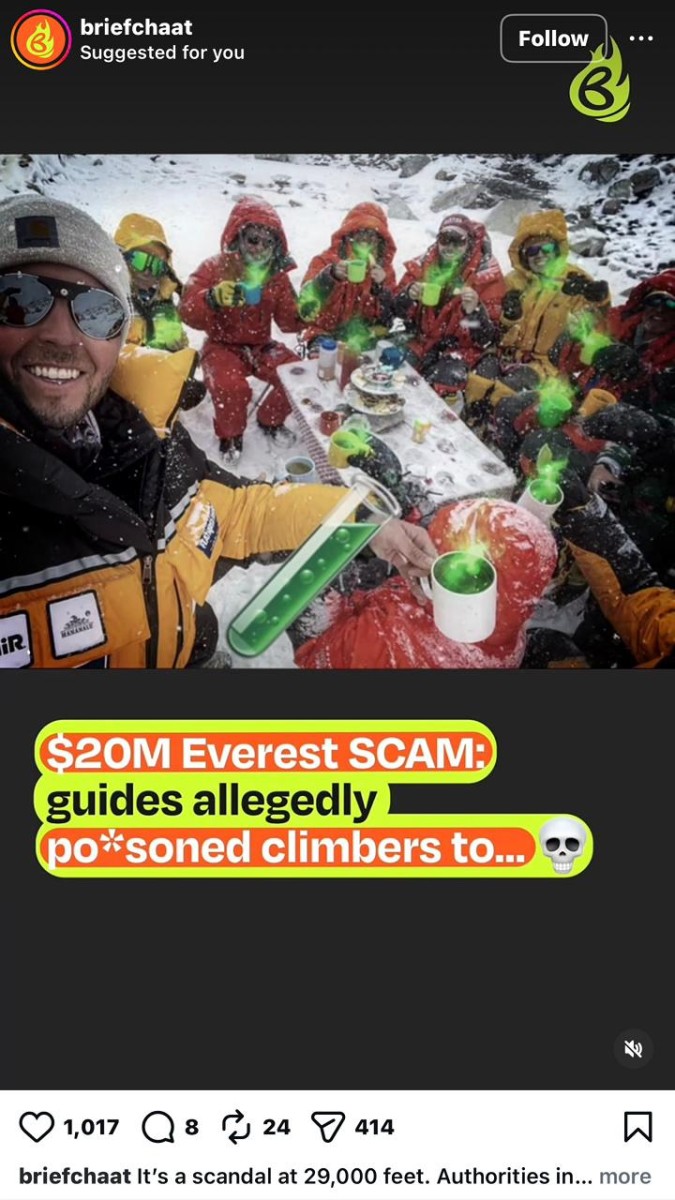
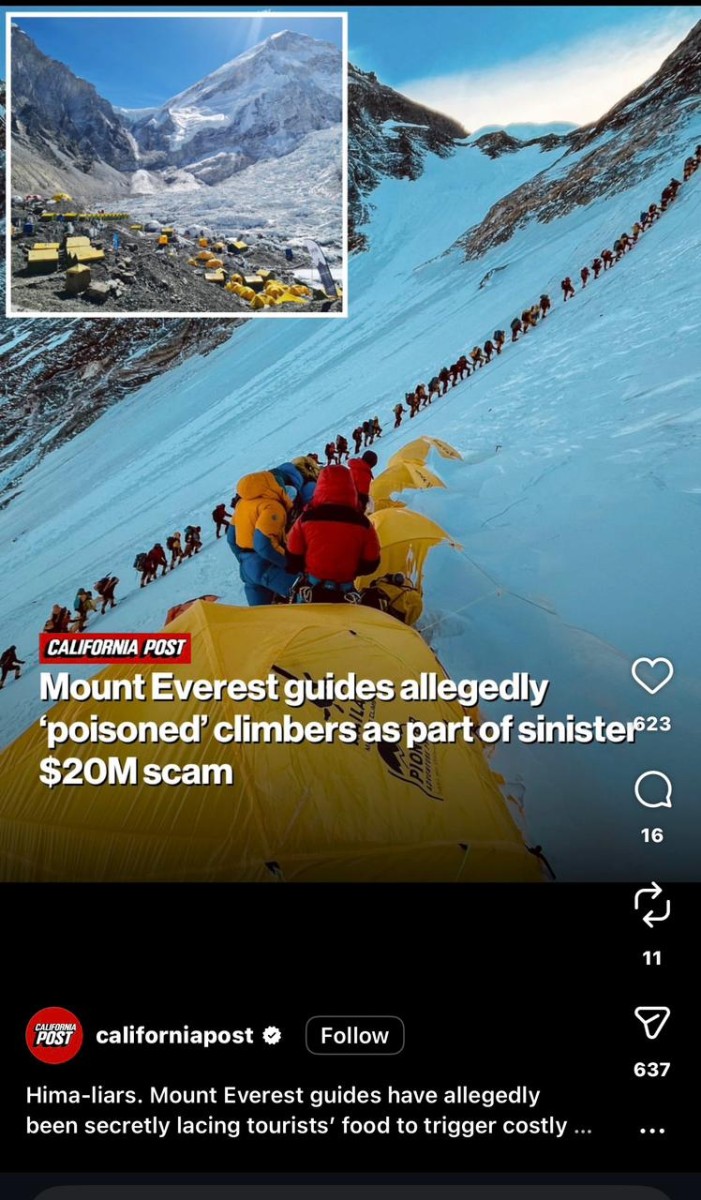
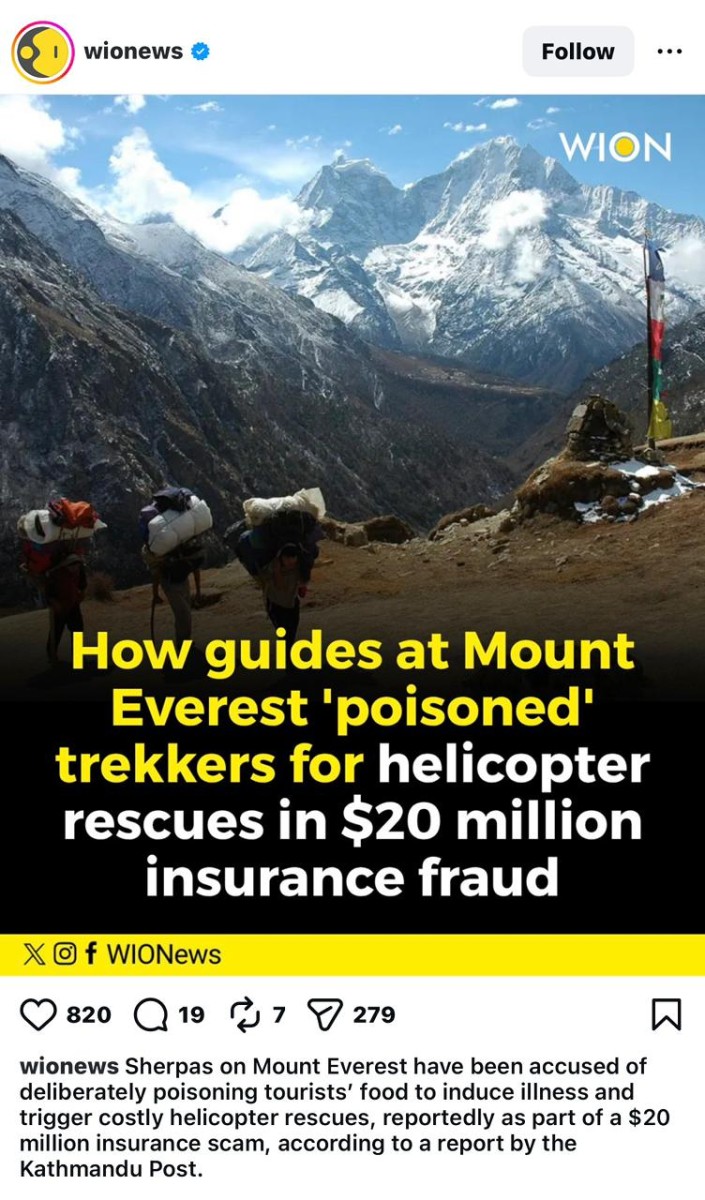
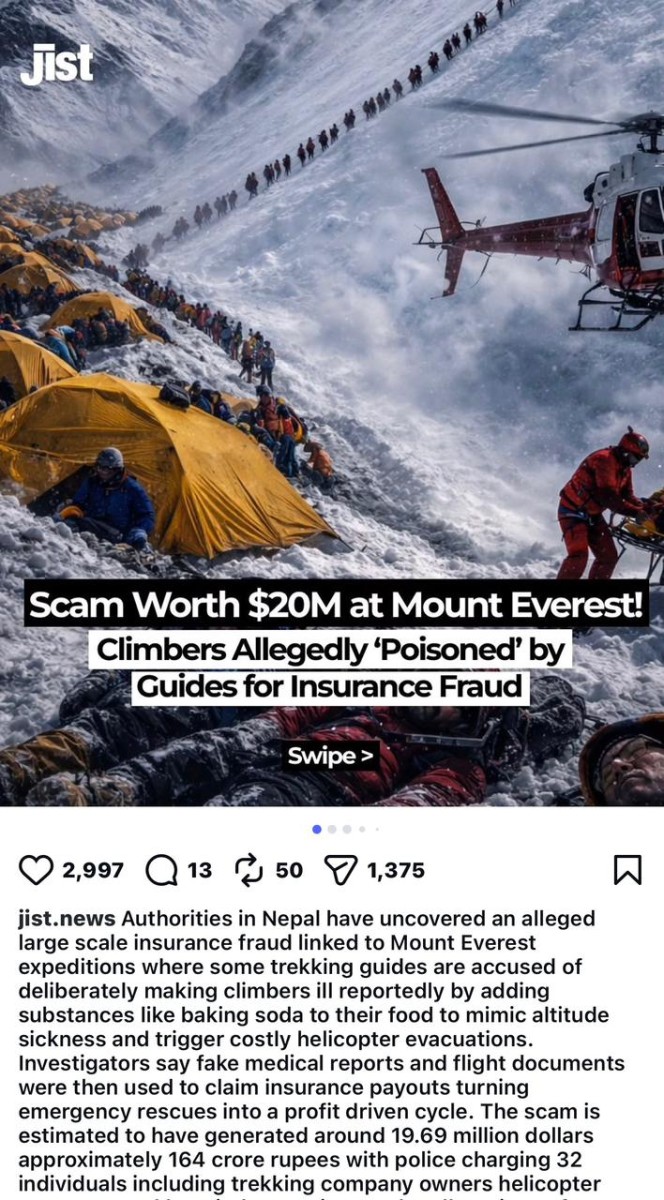
03/04/2026
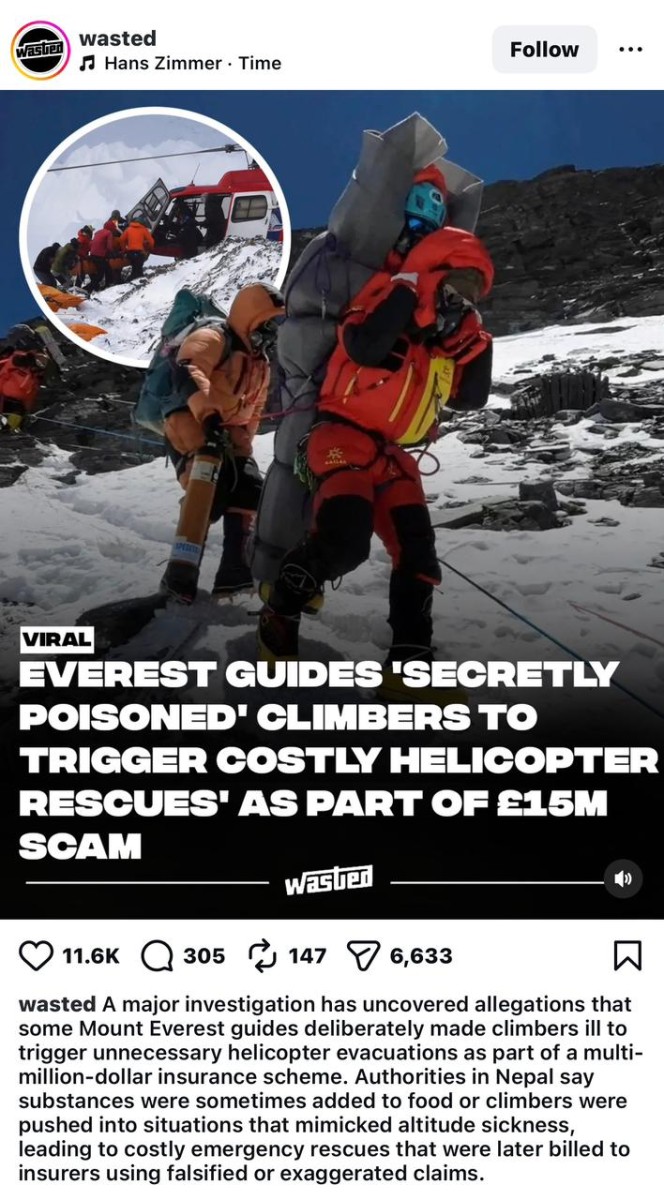
DEATH AT THE TOP OF THE WORLD: THE SICKENING SCANDAL SHAKING EVEREST!
The Roof of the World is rotting from the inside out. While brave climbers shell out life savings to stand on the peak of Mount Everest, a sinister web of greed, poison, and cold-blooded fraud is reportedly turning the Himalayas into a high-altitude crime scene.
A bombshell investigation by Explorersweb has sent shockwaves through the global mountaineering community, exposing a "business model" that reads more like a thriller than a trekking brochure. We’re talking about the ‘Everest Rescue Scam’—and it’s more lethal than any avalanche.
The Sickening 'Juice' Plot
Imagine this: You’re gasping for air at 25,000 feet. Your lungs are burning, your head is spinning. You trust your guides. But according to harrowing reports, some unscrupulous operators have been allegedly drugging their own clients. By spiking food or drink with substances that induce nausea or extreme lethargy, guides can force a "medical emergency." Why? Because a healthy climber only pays for the trek, but a sick climber triggers a massive insurance payout. > "It’s the ultimate betrayal," says one industry insider. "They aren’t just selling a dream; they’re selling your safety for a kickback."
The Fake Rescue Factory
Once the climber is "incapacitated," the real money starts flowing. The investigation highlights a sophisticated racket involving fake helicopter evacuations. Here is how the dirty math works:
The Set-Up: Guides report a life-threatening emergency.
The Flight: Helicopters are called in—sometimes flying nearly empty or carrying multiple "victims" while charging insurance companies for individual private flights.
The Kickback: The trekking agency, the helicopter company, and even some hospital clinics reportedly split the loot.
We are talking about millions of dollars in fraudulent claims. Some estimates suggest that nearly half of all helicopter rescues in recent years were unnecessary or outright fabricated for profit.
The Insurance Giant Strikes Back
The world’s biggest insurance providers aren't taking it lying down anymore. Fuming at being treated like an "ATM at Base Camp," many are now threatening to blacklist Nepal entirely or hike premiums so high that the average adventurer will be priced off the mountain.
If you thought the "Death Zone" was dangerous because of the oxygen levels, think again. The real danger is the person holding your rope.
Why Does This Matter?
This isn't just about money; it’s about human life. When the skies are clogged with "fraud flights," genuine emergencies might be ignored. When the reputation of the Sherpas—the legendary backbone of the mountain—is tarnished by a few greedy agencies, the entire culture of Everest suffers.
The Bottom Line: Everest has become a circus, but the clowns are carrying needles and the safety nets are made of lies. Before you book that "trip of a lifetime," you better make sure your guide is interested in your summit—not just your insurance policy.
Is the world's highest peak now its lowest point for human morality? The mountain doesn't care, but the world is finally watching.
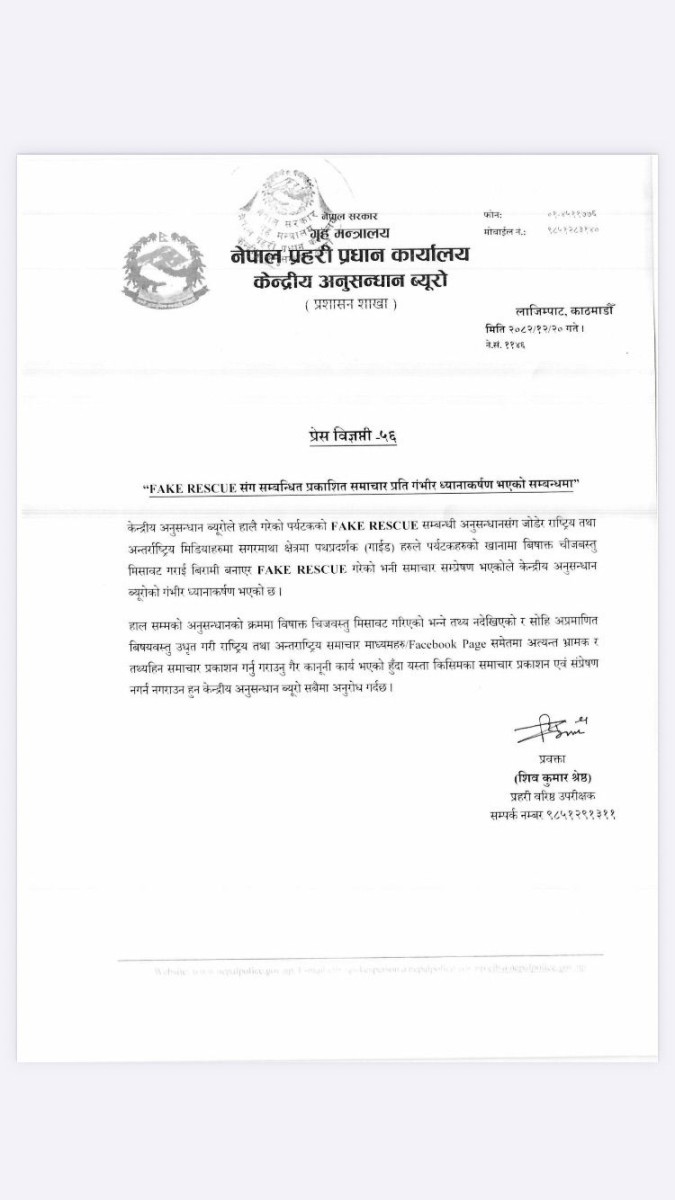
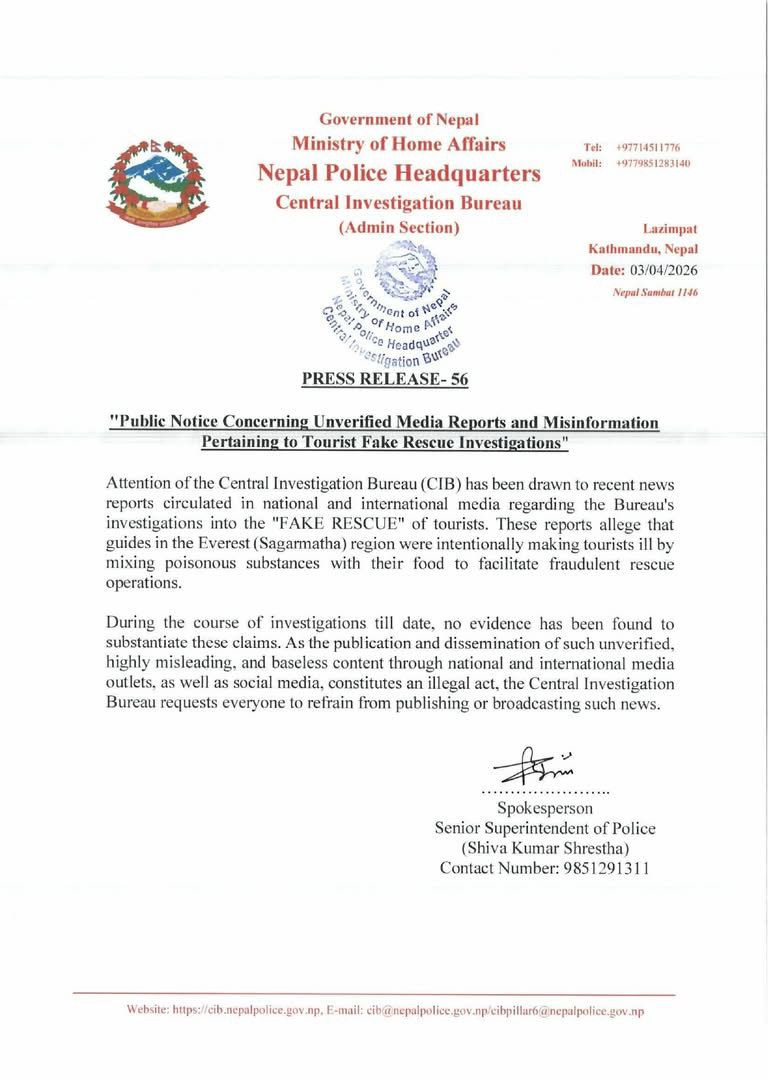
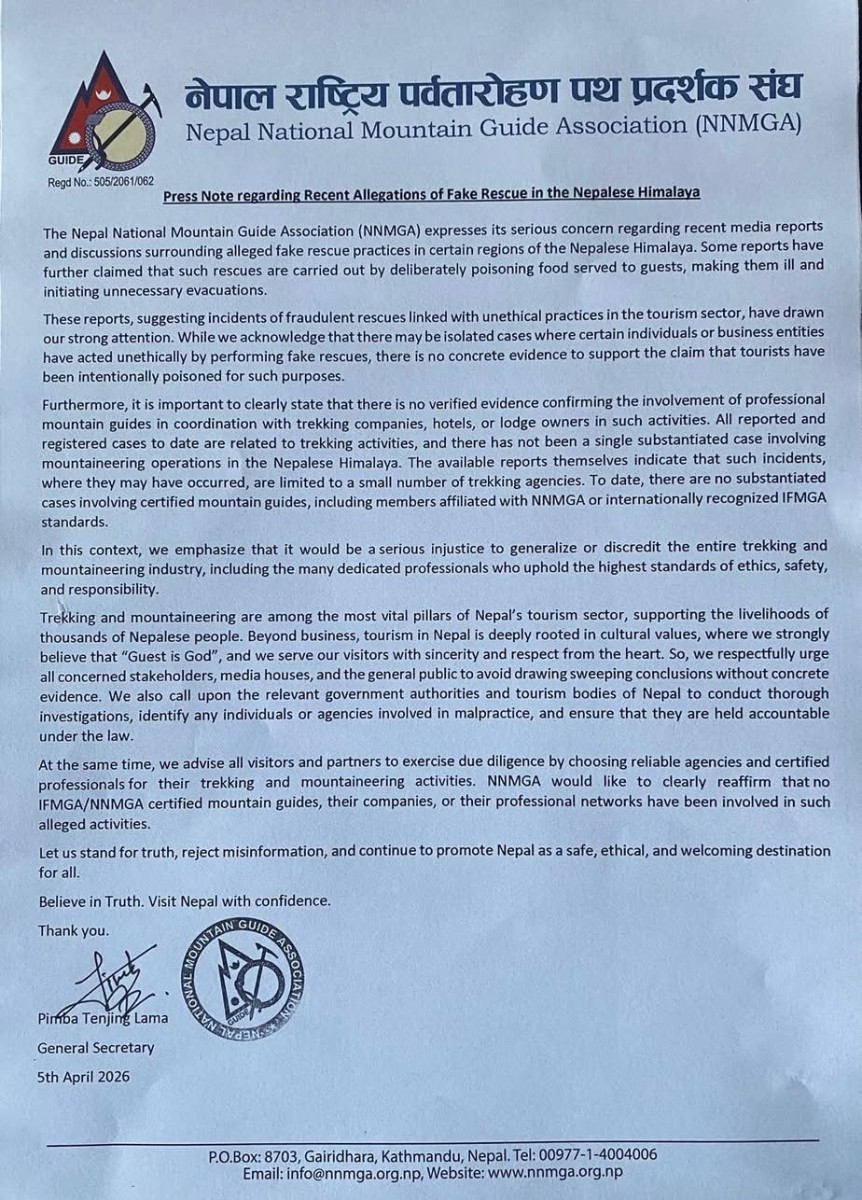
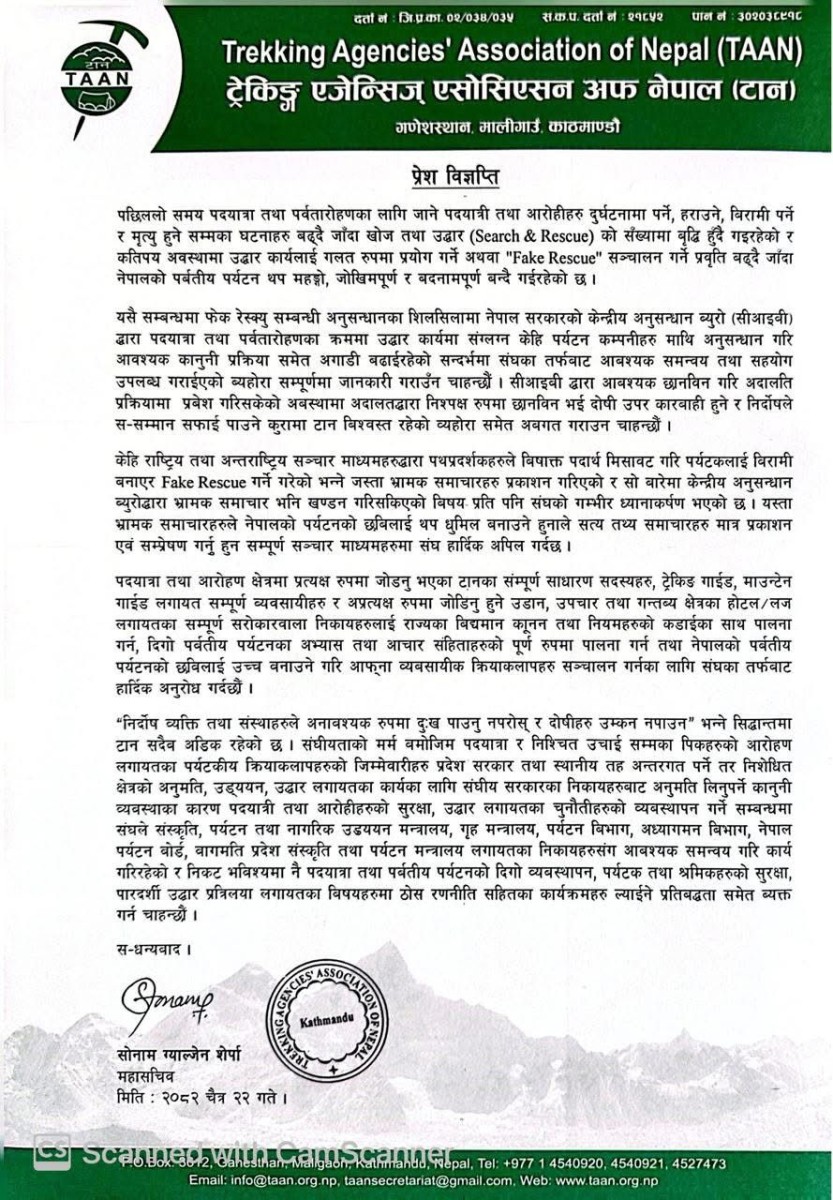
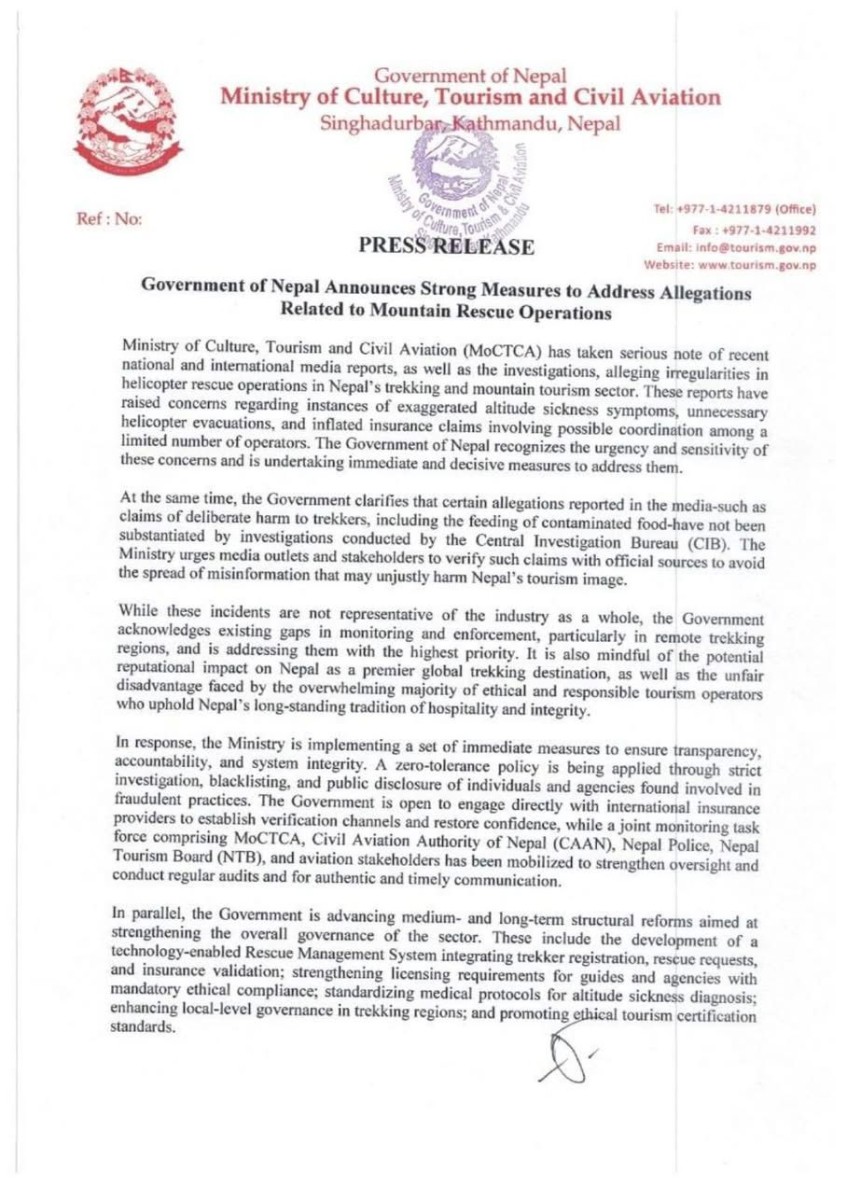
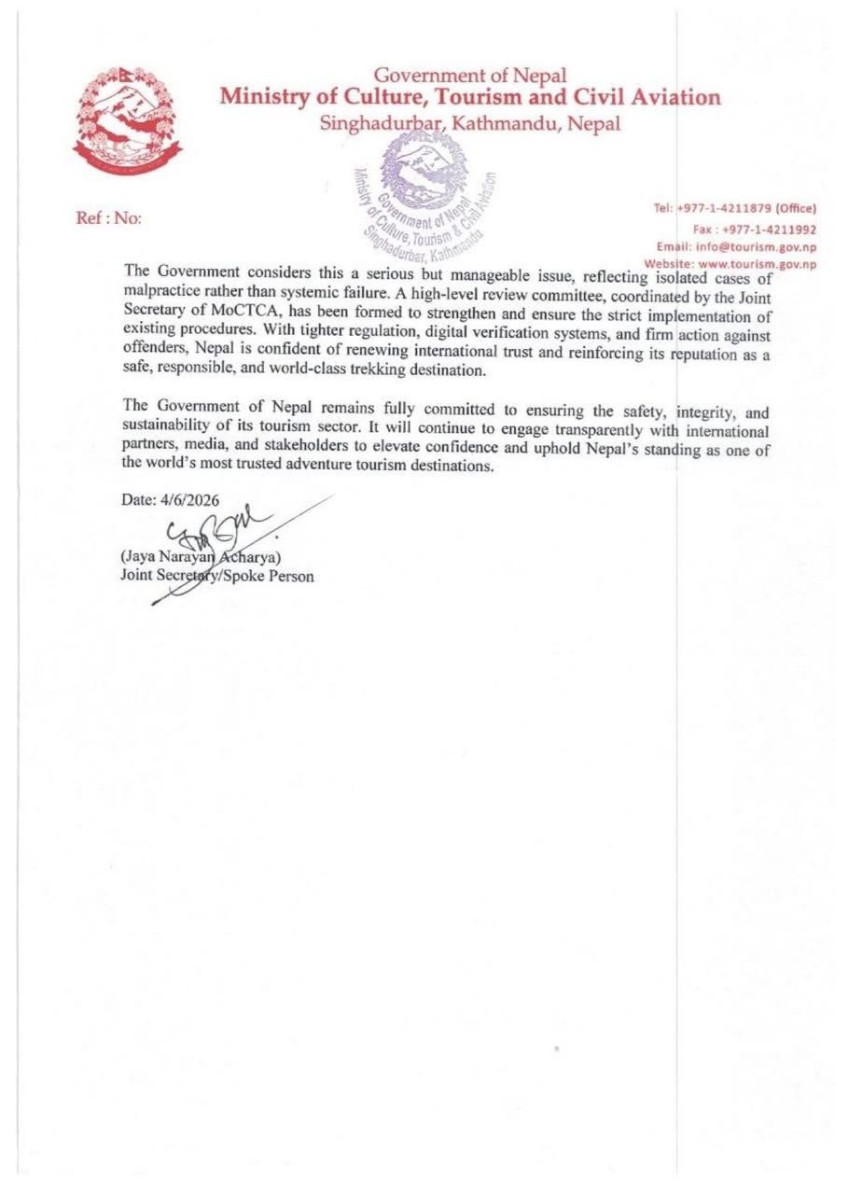
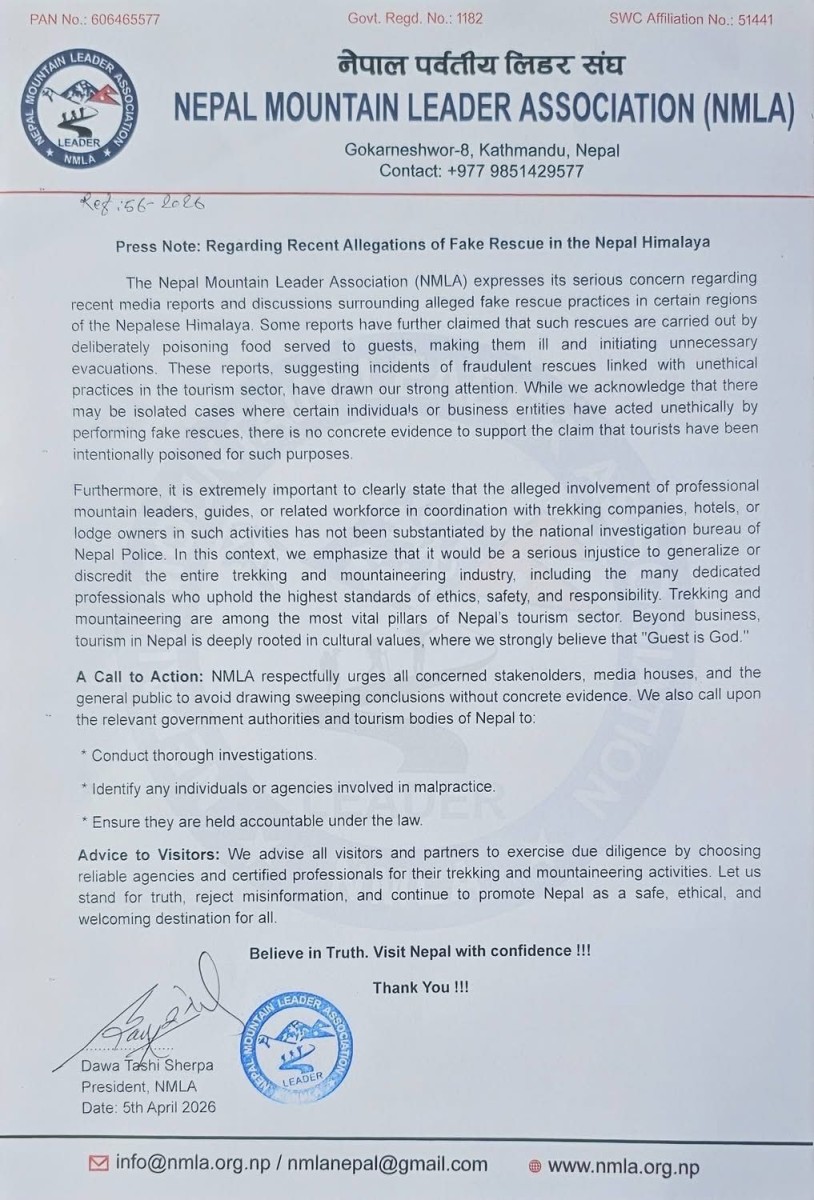
Diyo post : Allegations of Poisoning Tourists for ‘Fake Rescues’ on Everest are Misleading and Baseless: CIB