Feel the thrill of the Himalayas with team of highly experienced trekking professionals.

Five 8,000m Peaks. One Incredible Summit.

Home » Destinations » Nepal » Peak Climbing in Nepal » Mera Peak Climbing
From USD
100% 5 star based on 81 reviews.
Based on TripAdvisor Reviews
Mera Peak Climbing

Mera Peak Climbing

Mera Peak Quick Facts

  • Duration: 18 Days

  • Max Altitude: 6,476m (21,247 ft)

  • Grade: Physically Strenuous / Technically Accessible

  • Region: Hinku Valley (Everest Region)

  • Visual Prize: Views of Mt. Everest, Lhotse, Makalu, Cho Oyu, and Kanchenjunga.

Mera Peak climbing:Mera Peak (6,400m.) known as one of the highest peak in Nepal lies between the peak of Mount Everest and Mont Blanc. Along with vista from high altitude, while climbing Mera Peak, Encounter Nepal will assist you to explore around Solukhumbu where you will observe culture, tradition and way of life of Sherpa inhabitants as well.
Mera Peak expands up to the South of Everest and lets you see the striking and distant valleys of Hinku and Hongu and also witness forest of blue pines and rhododendrons which turns out to be unforgettable experience. Mera Peak Climbing begins from Kathmandu to Jiri and then we move to Lukla (2800m.). We pass through the Zatra-La pass which has vertical trail and from here you can observe the world’s 6th highest mountain, Cho Oyu and Numbur Himal too. Coming into the Mera Valley from Chatrabu, we will view the best sight of Mera’s South, Central as well as North peaks. Then, we move on passing through striking forests, of rhododendron, bamboo and pine in order to arrive at Kothe (Hinku khola) and then experiencing easier route, you will reach to Khare Base Camp, at 5000m. From Khare to Mera-La, the path is challenging and there are a number of crevasses but from Mera–La to our high camp (5800m.) the trail is quite trouble-free.
Most significantly, the trip from Mera La gives out spectacular mountain scenery of the eastern Nepal Himalayas. Particularly, peaks like mighty one Mt. Everest (8848m.), Cho-Oyu (8201m.), Lhotse (8516m.), Makalu (8463m.), Kanchenjunga (8586m.), Nuptse (7855m.) and Chamlang (7319m.) amongst many others seems to be best part to view. 
All you need to ascend Mera peak Climbing is physical fitness and if you are really interested to witness the view of magnificent peak with eye-catching setting let Encounter Nepal make it probable.
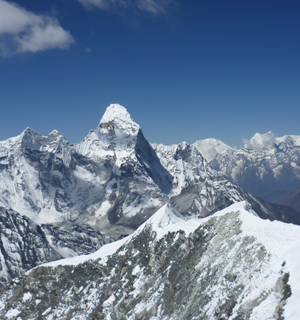
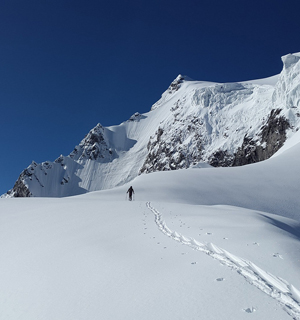
This itinerary is designed for those who want to "do it right." By taking 21 days, you enjoy a more gradual ascent through the stunning Sherpa villages of the lower Khumbu before entering the high-altitude Hinku Valley.

Day Destination Highlights
01-03 Kathmandu & Lukla Preparation, briefings, and the legendary flight to Lukla.
04-05 Lukla to Panggom Trekking through lush rhododendron forests and Sherpa hamlets.
06-08 Ramailo Danda to Kothe Entering the wild Hinku Valley; views of Mera South begin to appear.
09 Acclimatization Day Critical rest day in Kothe to prepare for the 4,000m+ transition.
10-12 Thagnag to Khare Arriving at Base Camp ($5,045m$). Pre-climb training session.
13-14 High Camp Push Moving to Mera High Camp ($5,800m$). Sunset views over Everest.
15 SUMMIT DAY Summit Mera Peak ($6,476m$). Return to Khare.
16-18 The Return Journey Retracing steps through Kothe and back via the Zatra La Pass.
19-21 Lukla & Kathmandu Celebration dinner and final international departure.

Price Includes:

  • Everest National Park Entry Permits
  • climbing permit,Climbing Guide,climbing gear 
  • Trekkers' Information Management System (TIMS)
  • Kathmandu-Lukla -Kathmandu air ticket (USD +NRS)
  • Three Meals a Day: breakfast, lunch, dinner including tea/coffee with meals time (one per meal)
  • One Guide: English speaking, insured, registered, well-equipped, his salary, food and accommodation
  • One porter Between two person  insured registered, well-equipped, salary, food and accommodation
  • Accommodation (shared) in a tea house lodge
  • Safe drinking water
  • Emergency care service

Price Excludes:

  • Bar & beverage bills,Personal climbing gear 
  • Personal expenses. bottled water, desserts, shower, insurance, rescue,  personal clothing,
  • Any additional services requested and tips to the staff.

Mera Peak Climbing: Frequently Asked Questions

1. Is Mera Peak the highest trekking peak in Nepal? Yes. At 6,476m (21,247 ft), Mera Peak is officially the highest trekking peak in Nepal. While it is higher than Island Peak or Lobuche, it is technically less "steep," making it the ultimate trophy for fit trekkers who want to break the 6,000m barrier without advanced technical climbing.

2. How difficult is the summit push on Mera Peak? The climb is graded Alpine PD (Peu Difficile). Most of the ascent is a steady glacier walk. The most challenging part is the final 40-50 meters, which can involve a 40-degree snow slope. Our Sherpa guides use fixed ropes here to ensure you reach the summit safely.

3. Do I need supplemental oxygen for Mera Peak? No. At 6,476m, supplemental oxygen is not required or standard. Instead, we focus on proper acclimatization. Our 18-day itinerary includes specific rest days in the Hinku Valley and at Khare to ensure your body adapts naturally to the thin air.

4. What mountains can I see from the Mera Peak summit? Mera Peak offers arguably the best view in the Himalayas. From the summit, you can see five of the world’s six highest mountains: Mt. Everest (8,848m), Lhotse (8,516m), Makalu (8,485m), Cho Oyu (8,188m), and Kanchenjunga (8,586m).

5. What is the difference between the "Lower" and "Upper" routes?

  • The Classic (Lower) Route: Goes through Paiya and Pangkoma. It is better for acclimatization and cultural immersion.

  • The Direct (Upper) Route: Crosses the Zatra La Pass (4,610m) almost immediately. This is shorter but physically harder and carries a higher risk of altitude sickness if you aren't already fit.

6. Do I need previous mountaineering experience? Prior experience with an ice axe and crampons is a plus, but not mandatory. We provide a Technical Training Session at Khare (Base Camp). We will teach you how to use your harness, jumar, and ice axe and how to walk on a man-rope before the summit bid.

7. Is there a "Base Camp Join" option for my friends? Yes! This is a great feature of our Mera Peak expedition. Friends who don't want to climb can trek with you to Khare (5,000m). While you spend 2-3 nights at High Camp and the Summit, they can enjoy the alpine beauty of the Hinku Valley and reunite with you for the trek back to Lukla.

8. What kind of insurance is required? You must have insurance that specifically covers "Mountaineering or Peak Climbing" up to 6,500m. It must also include Emergency Helicopter Evacuation. Most standard policies only cover up to 4,000m, so check your "high-altitude" rider carefully.

9. Where do we sleep during the climb? During the trek, we stay in Teahouses (Lodges). However, for Mera Peak, we spend 2-3 nights in High-Quality Tents at Mera La and High Camp (5,800m). Our crew provides warm sleeping mats and all meals at these camps.

10. What happens if the Lukla flight is delayed? Weather in Lukla is unpredictable. We build a contingency day into our 18-day itinerary. If flights are grounded, we can often arrange a helicopter transfer (at an extra cost) to ensure you don't miss your international flight or your summit window.