

Ruby valley trekking is trek falling between Manaslu Conservation Area and Langtang National Park. Along with the wide varieties of striking panorama of magnificent Himalayan view of Ganesh Himal I (7429m.), II (7118m.), III(7110m.), IV(7052m.), V(6986m.), VII(6350m.); Manaslu (8163m.), Lamjung Himal (6800m.), Langtang Lirung (7300m.) and other several peaks, you will also see twin cascades Ganga and Jamuna which adds delight to your spirit.
Best seasons to go for Ruby Valley Trek are in March- April and May since you can witness the hillsides here beautifully filed up with blossoming rhododendron, national flower of Nepal. En route you will pass through several villages of diverse ethnic people including Tamang, Chhetri, Gurung and observe their culture and way of life. . Besides, Ruby valley trekking does not have tea houses or lodges, basic infrastructure and that is why, tent or home stay is a ordinary option for accommodating while trekking.
There are other attractions of Ruby valley trek - Buddhist monasteries, calm ponds, different species of herbal plants, stunning landscapes, ruby, crystal, zinc mining, different species of birds, different wild animals such as Thar, barking deer, Ghoral, Red pandas, snow leopard, Tiger, Bear, wolf, various kinds of monkeys, musk deer and many more . To acquire the combination of best natural and cultural experiences of Ruby valley trekking, EncountersNepal assists you to plan your itinerary according to your time and schedule.
II. 2027 Regulation Update: Mandatory Guide
As of 2027, the Nepal Tourism Board has strictly enforced the Mandatory Guide Rule. Foreign trekkers are no longer permitted to trek Ruby Valley solo. You must be accompanied by a licensed government guide. Additionally, the old "Green TIMS" card has been replaced; all permits are now issued only through registered trekking agencies.
Itinerary Highlights
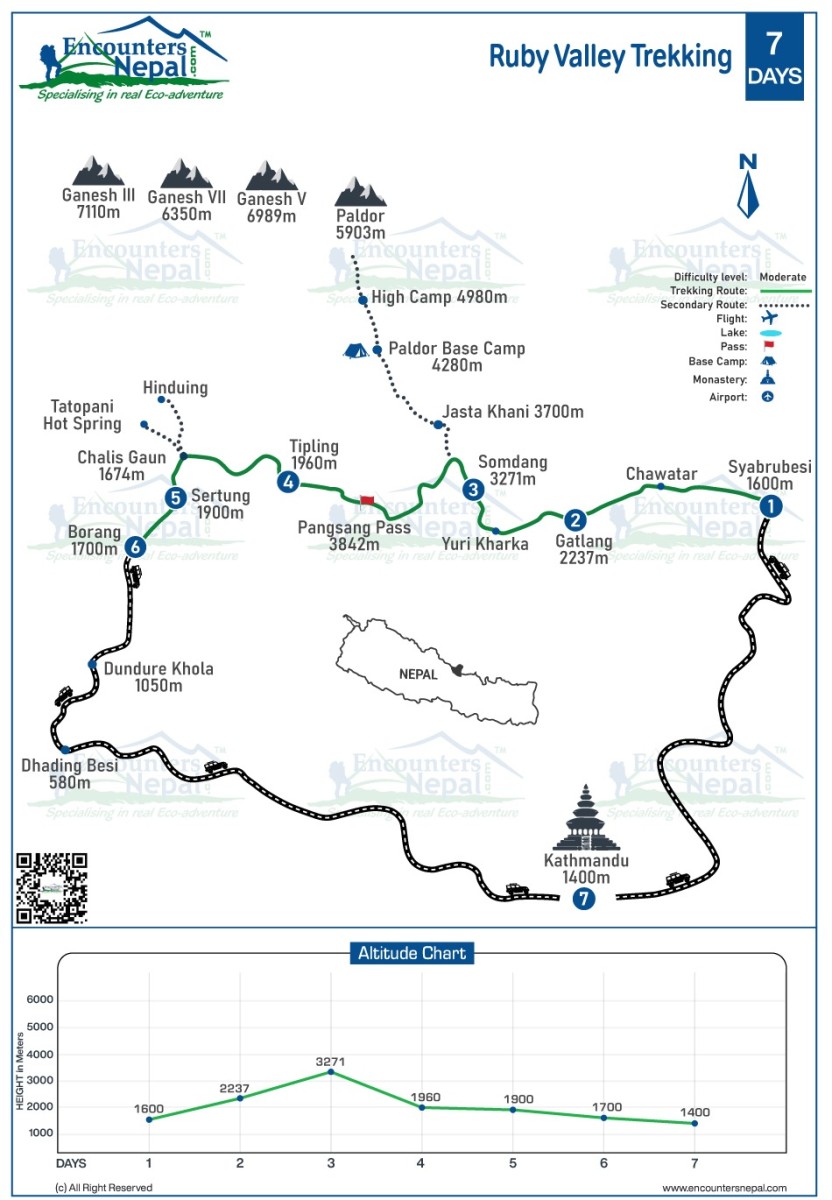
Day 1: The Gateway (KTM to Syabru Besi)
Start your journey with a scenic drive through the "Zig-Zag" roads of the Trisuli River valley. You'll pass Dhunche Bazaar, the administrative heart of the region, before descending to the confluence of the Bhote Koshi and Langtang Rivers.
Day 2-3: The Living Museum (Gatlang to Somdang)
-
Gatlang Village: Explore a "Black Village" of stone houses. Visit Parvati Kund, a sacred alpine lake famous for the Janai Purnima pilgrimage.
-
The Mines: Trek to Somdang, the site of an abandoned 1.4km mining tunnel. Locals still dream of reviving the extraction of rubies, zinc, and crystals here. Don't miss the 200m Chukarma Waterfall.
Day 4: The Sky View (Pangsang Pass to Tipling)
Reach the trek's highest point, Pangsang Pass (3,842m). You will see a 270-degree panorama of Ganesh Himal, Manaslu, and the Langtang Range. Descend into Tipling, a rare village where Buddhist Gumbas and Christian churches stand side-by-side.
Day 5-6: The Cultural Heart (Shertung, Chalish & Borang)
-
Shertung (Place of Gold): Hear legends of brothers hunting for gold.
-
Chalish Gaon: Home to the Gurung people. Witness the Ghatu (Ghasiri) Dance or a Dohori (courtship ritual) performance.
-
Borang Village: A large Tamang settlement where the ancient Jhankri (Shaman) dance remains a vibrant part of daily life.
Day 7: The Journey Home (Darkha Gaun to KTM)
Descend to Darkha Phedi for a rugged jeep ride to Dhading Besi. The final leg takes you along the Prithvi Highway back to the capital.
Why This Trek is Smart for 2027
-
No Flight Risk: Unlike the Everest region, you don't need to fly to Lukla. This trek is 100% accessible by road, avoiding flight cancellations.
-
Bio-Diversity: The region is home to over 300 species of birds and rare animals like the Musk Deer and Himalayan Tahr.
-
Community-Direct Tourism: Your stay in homestays ensures that 100% of your money goes directly to the local families of the Ganesh Himal.
Price Includes:
- Permit -Trekkers' Information Management System (TIMS)
- Local transport
- Three Meals a Day: breakfast, lunch, dinner including tea/coffee with meals time (one per meal)
- One Guide: English speaking, insured, registered, well-equipped, his salary, food and accommodation
- One porter Between two person insured registered, well-equipped, salary, food and accommodation
- Accommodation (shared) in a tea house lodge
- Safe drinking water
- Emergency care service
Price Excludes:
- Bar & beverage bills,
- Personal expenses. bottled water, desserts, shower, insurance, rescue, personal clothing,
- Any additional services requested and tips to the staff.