

Tsum Valley: A Journey into the Heart of the Sacred "Vivid" Valley
There is a place in the northern Gorkha mountains where time seems to have stood still for centuries. Known to the locals as a Beyul—a sacred "Hidden Valley"—Tsum Valley is one of the last frontiers of pure Himalayan culture. Forbidden to outsiders until 2008, this pristine sanctuary remains untouched by the rush of modern tourism. If you are searching for a trek that nourishes the soul as much as it challenges the body, Tsum is calling you.
The Meaning of Tsum
In the local Tibetan dialect, Tsombo—which evolved into "Tsum"—means vivid. It’s the perfect word to describe this land. Everything here is more intense: the sapphire blue of the glacial rivers, the sharp white of the Ganesh Himal peaks, and the deep, colorful traditions of the Tsumba people. To walk here is to walk through a living museum of Tibetan heritage.
Where Legends Breathe
Tsum Valley isn’t just a trekking route; it’s a spiritual pilgrimage. As you climb higher into the valley, the air becomes thick with the scent of juniper and the sound of chanting from ancient monasteries.
-
Ancient Sanctuaries: Visit Mu Gompa and Rachen Gompa, where orange-robed monks and nuns guard centuries-old murals and sacred scripts.
-
The Saint’s Grotto: Stand inside the Milarepa Piren Phu Cave, the very spot where the great Buddhist saint is said to have meditated in total silence.
-
A Valley of Peace: For hundreds of years, the people of Tsum have practiced Shyagya—a tradition of non-violence. No animals are hunted or slaughtered here, creating a harmony between humans and wildlife that you won’t find anywhere else on Earth.
Nature in its Purest Form
Enclosed by a fortress of giants—Ganesh Himal, Boudha Himal, and Sringi Himal—the scenery is nothing short of majestic. You’ll walk past endless Mani walls, each stone hand-carved with a prayer, and perhaps even catch a glimpse of the elusive Snow Leopard or Himalayan Tahr. And if you believe the local stories, keep an eye on the high ridges for the legendary Yeti, the "Abominable Snowman" of the wild north.
Before you reach the high altitudes, we’ll stop at the natural hot springs of Tatopani. There is nothing quite like soaking in healing, mineral-rich waters while looking up at the mountains you are about to conquer.
Why Walk with Encounters Nepal?
At Encounters Nepal, we don’t just handle your permits and logistics; we introduce you to a world we love. Because Tsum Valley is a restricted area, it requires careful planning and a deep respect for local customs. From the first drive out of Kathmandu to the final celebratory meal in Arughat, our team ensures your journey is safe, flexible, and deeply personal.
Why choose Tsum in 2026? Because in a world that is constantly moving, the Tsum Valley offers you the rare chance to be still. It’s a place of restricted crowds but unrestricted beauty—a vivid experience that
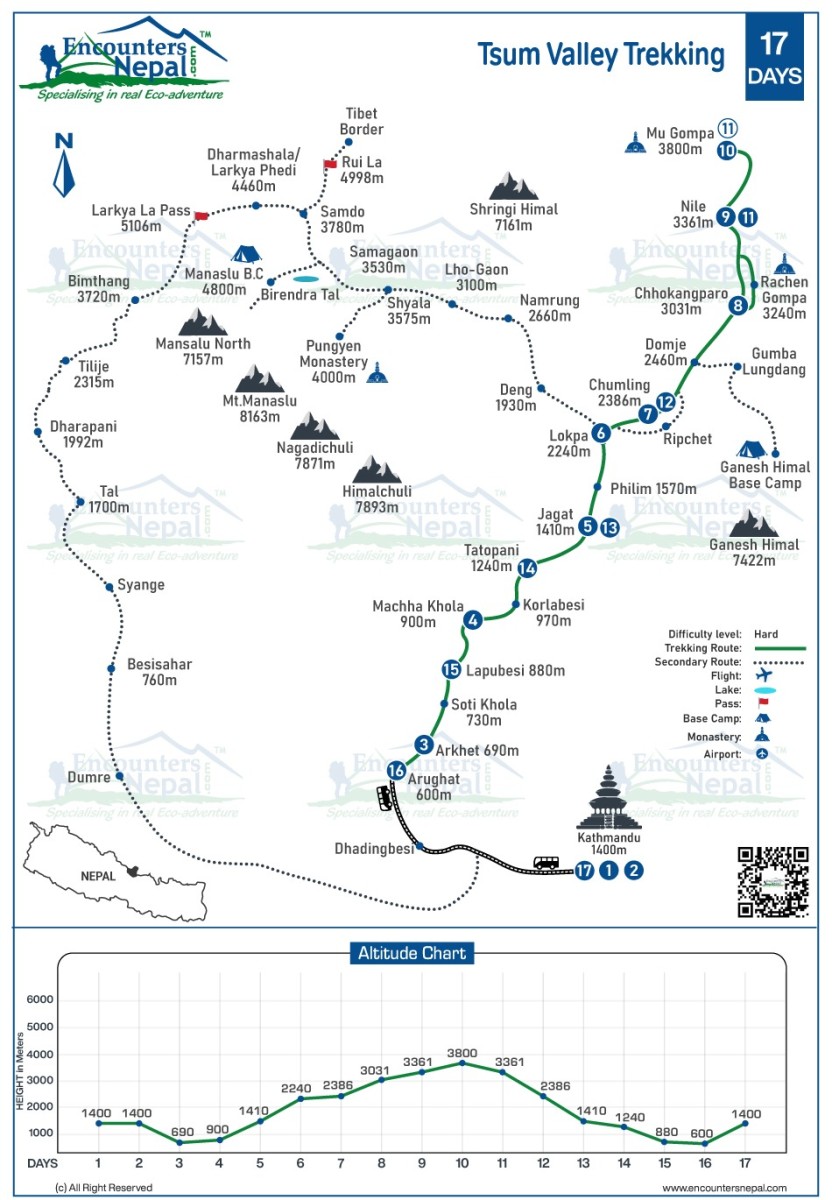
Option I: The Classic Tsum Valley Discovery (17 Days)
Best for: Travelers who want a balanced mix of culture, spiritual sites, and moderate trekking.
-
Day 01-02: Arrival in Kathmandu & Cultural Immersion (Sightseeing).
-
Day 03: Scenic Drive to Arughat; Trek to Arkhet Bazar.
-
Day 04-05: Following the Buri Gandaki: Journey through Machha Khola to Yaru Khola.
-
Day 06-07: Entering the Sacred Gate: Reach Lokpa and descend into Lower Tsum (Chumling).
-
Day 08-09: The High Heart of Tsum: Chhokangparo to Nile. Visit the sacred Milarepa Piren Phu Cave.
-
Day 10-11: The Spirit of Buddhism: Explore Mu Gompa (3,700m) and the ancient Dephyudonma Nunnery.
-
Day 12-14: The Return Circuit: Visit Rachen Gompa and soothe your muscles in the Tatopani Hot Springs.
-
Day 15-17: Final Descent: Trek via Lapubeshi back to Arughat; drive to Kathmandu.
Option II: The "Hidden Gem" Cultural Circuit (13-14 Days)
Best for: Adventurers with limited time who want to reach the most remote monasteries.
-
Day 01-04: Deep drive to Arughat and trek through the gorges of Jagat (1,410m).
-
Day 05-07: Rapid ascent to Upper Tsum: Lokpa to the hospitable village of Chhokangparo.
-
Day 08-10: Spiritual Highs: Rest day at 3,000m followed by a trek to the majestic Mu Gompa.
-
Day 11-13: The Nunnery & The Wilderness: Experience Rachen Gompa and the remote Gumba Lungdang before descending to Ripchet.
Option III: The Grand Tsum Wilderness Expedition (26 Days)
Best for: True explorers wanting to touch the Tibetan border and experience the high alpine Sangti (5,066m).
-
Day 01-09: The Approach: Traditional route from Arughat to the Upper Tsum villages.
-
Day 10-13: High Altitude Living: Moving through Chho Syong (4,000m) and the nomad camps of Chhekya.
-
Day 14-15: The Summit Experience: Trek to Sangti (5,066m) and Yamdro.
-
Day 16-22: Himalayan Solitude: Exploring Thongbu, the hidden Gumba Lungdang, and Ripchet.
-
Day 23-26: The Long Road Home: Following the river via Soti Khola back to the capital.
Option IV: The Tsum Valley & Manaslu Circuit Fusion (24 Days)
Best for: The ultimate "two-in-one" trekker who wants to cross the Larkya La Pass.
-
Day 01-09: Cultural Start: Exploring the main monasteries of the Tsum Valley.
-
Day 10-14: The Connection: Moving from the "hidden valley" back to the main Manaslu trail at Bihi.
-
Day 15-18: High Mountain Life: Acclimatizing in Samagaun and Samdo (3,860m).
-
Day 19-21: The Big Challenge: High Camp to the Bimtang Valley via the Manaslu Pass.
-
Day 22-24: Down to the Marsyangdi: Trek to Dharapani and drive back to Kathmandu.
Option V: The Authentic Village & Heritage Trail (21 Days)
Best for: Photographers and culture lovers focusing on local village life (Home-stays).
-
Day 01-03: Arrival and drive to the off-beat Tripureswor region.
-
Day 04-06: Rural Immersion: Trekking through the beautiful villages of Fulkarka and Manbu.
-
Day 07-12: The Tsum Heartbeat: Reaching the high monasteries and the nomadic grazing lands of Bhajyo.
-
Day 13-16: Hidden Spirituality: Discovering Kalung and the nunneries of Gumba Lungdang.
-
Day 17-21: River Return: Trekking the low-valley route via Philim and Machha Khola to departure.
Price Includes:
• Hotels in Kathmandu with Bed & Breakfast as per itinerary.
• Permit fee of trekking area
• Conservation Permit
• Meals during the trekking Breakfast, Lunch, Dinner
• Lodge accomodation
• Trek point transportation by bus
• guide /porter/ &Staffs insurance, food & daily allowance for them
• If home stay accommodation in home stay
Price Excludes:
- Bar & beverage bills,
- Personal expenses. bottled water, desserts, shower, insurance, rescue, personal clothing,
- Any additional services requested and tips to the staff.